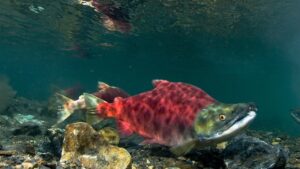
The Atlantic salmon is a powerful migratory fish that hatches in rivers, grows at sea and returns to its home river to breed. It is an iconic species of northern rivers, but wild populations have declined sharply.
Interesting facts
- Salmon can leap waterfalls and weirs more than 3 metres high.
- Unlike most Pacific salmon, Atlantic salmon can survive spawning and return to breed again.
- Young salmon go through stages called alevin, fry, parr and smolt.
- In 2023, the IUCN moved the Atlantic salmon from Least Concern to Near Threatened.
- Most salmon sold in shops is farmed Atlantic salmon.
- Salmon carcasses bring ocean nutrients into rivers and forests.
Behaviour
After one to several years at sea, adult salmon return to their home rivers, often leaping obstacles on the way upstream. They stop feeding when they enter fresh water.
Breeding and young
Females dig nests called redds in gravel riverbeds and lay thousands of eggs, which males fertilise. The eggs hatch in spring, and young salmon spend one to four years in the river before migrating to sea.
Threats and conservation
Sea lice and escaped fish from salmon farms, dams and weirs, pollution, warming rivers and seas, and past overfishing.
Where to see it
- Falls of Shin and the Pitlochry fish ladder, Scotland
- Rivers of western Norway
- Miramichi River, New Brunswick, Canada
- Rivers of Iceland in summer
Status source: IUCN Red List. Profile last reviewed September 2026.