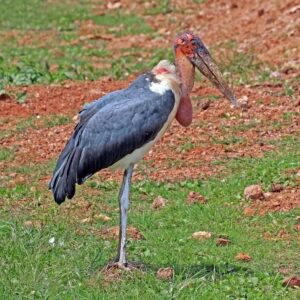
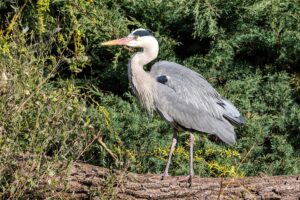
The white stork is a large, black-and-white wading bird with a red bill and legs. It is one of Europe’s best-loved birds, closely linked to villages and farmland, and a symbol of spring and good fortune.
Interesting facts
- White storks are almost silent; they communicate by loudly clattering their bills.
- In European folklore, storks deliver babies.
- They often nest on rooftops, church towers, chimneys and electricity poles.
- Poland has one of the largest breeding populations in the world.
- Some storks now spend the winter at landfill sites in Spain and Portugal instead of migrating to Africa.
- Pairs often return to the same nest year after year.
Behaviour
White storks forage by walking slowly through fields and wetlands, catching prey with their bills. They soar on thermals during migration, which is why they travel by day over land.
Breeding and young
Pairs build huge stick nests that grow over the years. The female lays three to five eggs, and both parents incubate them for about 33 days. Chicks fledge after about two months.
Threats and conservation
White storks have recovered in much of Europe. Threats include collisions with power lines, loss of wetlands and meadows, pesticides, and hunting on migration.
Where to see it
- Alsace, France, and the Algarve, Portugal
- Extremadura, Spain
- Villages in eastern Poland
- Strait of Gibraltar during migration
Status source: IUCN Red List. Profile last reviewed September 2026.
Where to see the white stork
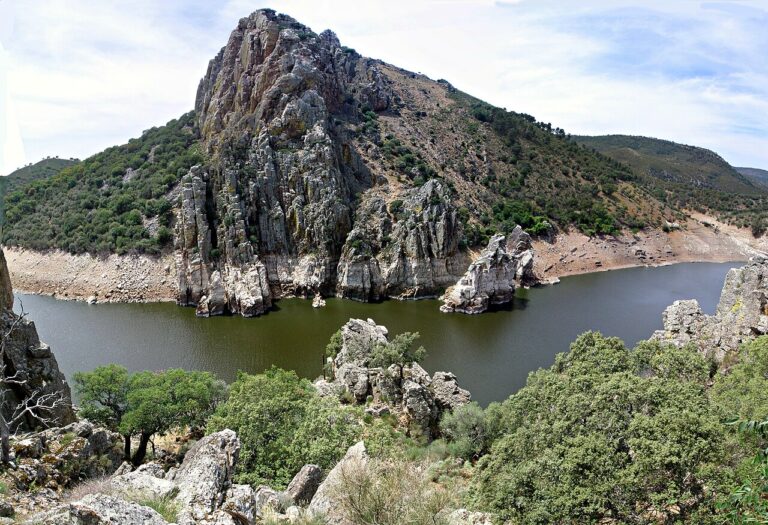 Birding in Extremadura and MonfragüeExtremadura's cliffs, oak dehesas and open plains are among Europe's finest birding landscapes. Where to go and when.
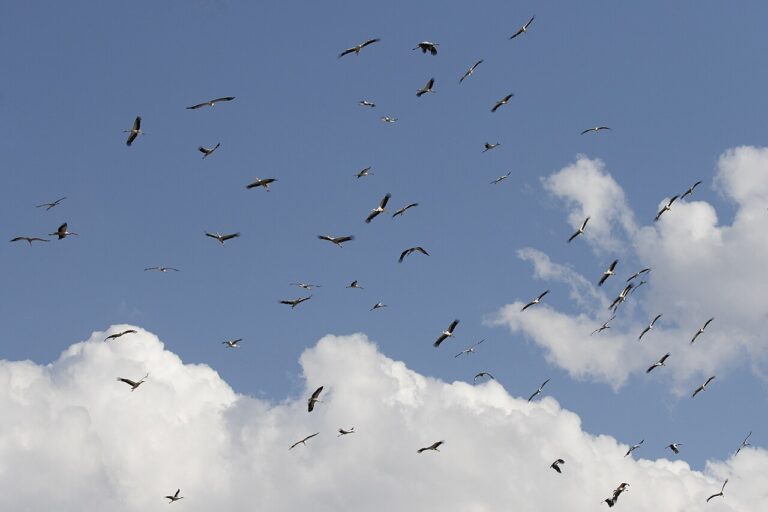 Raptor Migration at the Strait of GibraltarEvery autumn and spring, hundreds of thousands of birds of prey and storks cross the narrow Strait of…
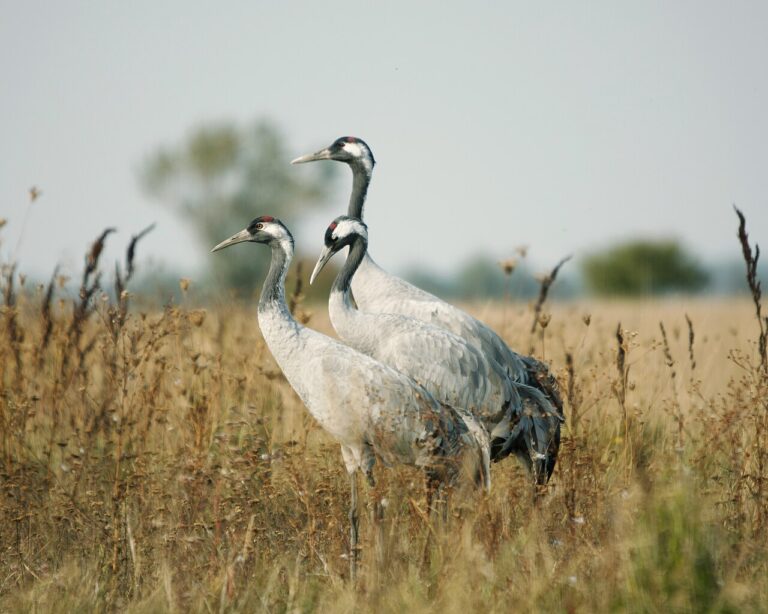 Crane Migration at HortobágyEvery autumn, tens of thousands of common cranes gather on Hungary's great plain. How to watch them fly…