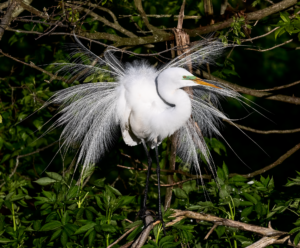
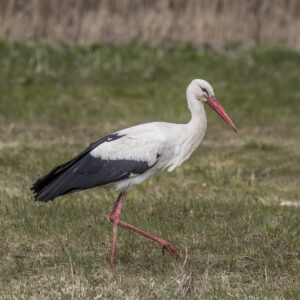
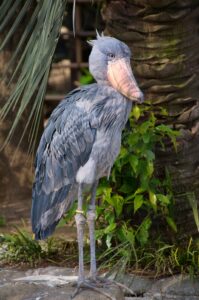
The grey heron is a tall, long-legged wading bird found across Europe, Asia and Africa. It is a patient, skilled hunter and a familiar sight on rivers, lakes and city parks.
Interesting facts
- Grey herons stand motionless for long periods, then strike with lightning speed.
- In flight, they fold their necks into an S-shape, unlike storks and cranes.
- They nest in colonies called heronries, usually in tall trees.
- Herons in some cities wait at fish markets and ponds for easy meals.
- They can swallow surprisingly large fish, and even rats and ducklings.
- They are among the earliest birds to nest in Britain, starting in February.
Behaviour
Grey herons hunt alone, wading slowly or standing still in shallow water. They roost and nest together in colonies.
Breeding and young
Pairs build large stick nests and lay three to five eggs. Both parents incubate them for about 25 days, and chicks fledge after about seven to eight weeks.
Threats and conservation
The species is widespread and common. Harsh winters, pollution and wetland loss can affect local populations.
Where to see it
- Regent’s Park and other London parks
- Wetlands across Europe and Asia
- Rivers and lakes throughout Africa
- Amsterdam, where herons wait at fish stalls
Status source: IUCN Red List. Profile last reviewed September 2026.
 Danube Delta Birding Guide
 The Camargue: Flamingos, White Horses and Wetlands