The blue wildebeest is a large antelope with a heavy front, a shaggy mane and beard, and a slender back end. Its huge migratory herds are one of the great wildlife spectacles on Earth and are central to the ecology of East African grasslands.
Interesting facts
- About 1.3 million wildebeest take part in the Serengeti–Mara Great Migration.
- Calves can stand within minutes of birth and run with the herd within hours.
- Wildebeest are also called gnus, after the Khoikhoi name.
- They follow the rains to find fresh grass, travelling hundreds of kilometres a year.
- Both males and females have curved horns.
- The Liuwa Plain in Zambia hosts Africa’s second-largest wildebeest migration.
Behaviour
Wildebeest live in herds that can join into enormous aggregations. They graze mainly on short grass and need to drink regularly. During the rut, territorial males round up females and fight rivals with loud grunts and clashing horns.
Breeding and young
After a gestation of about 8.5 months, most calves are born in a short season at the start of the rains. Calves follow their mothers closely from the first hours of life.
Threats and conservation
Fences, roads and farms block migration routes, and some populations have collapsed as a result. Overall, the species remains abundant in protected areas.
Where to see it
- Serengeti National Park, Tanzania
- Maasai Mara, Kenya, from July to October
- Liuwa Plain National Park, Zambia
- Etosha National Park, Namibia, and Kruger National Park, South Africa
Status source: IUCN Red List. Profile last reviewed September 2026.
Where to see the blue wildebeest
 Liuwa Plain: Africa’s Second-largest Wildebeest MigrationIn remote western Zambia, tens of thousands of wildebeest gather on open plains with the first rains, watched…
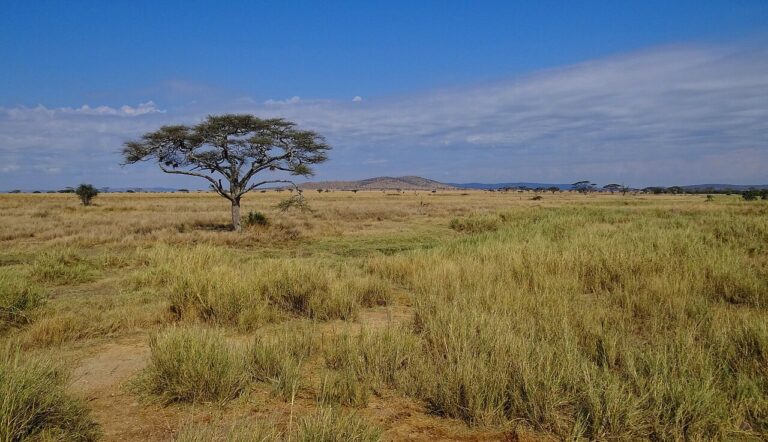 Best Time for a Safari: Month-by-Month Across AfricaThere is a great safari somewhere in Africa every month of the year. Where to go, month by…
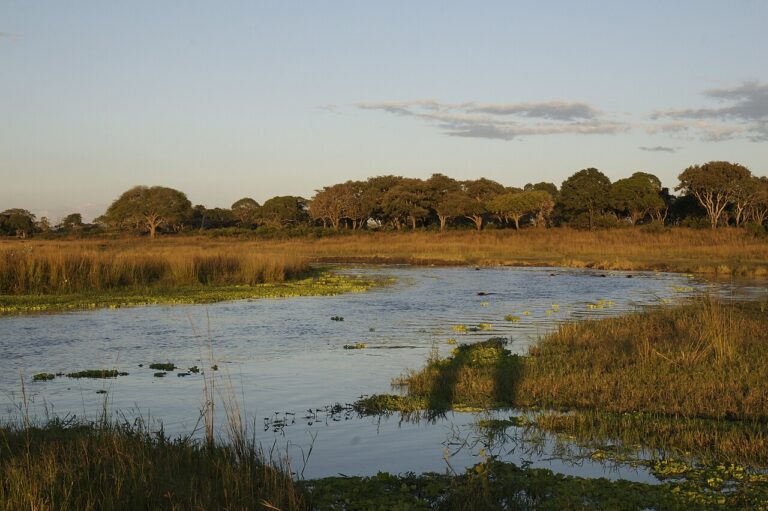 Green Season Safaris: Why Travelling in the Rains Can Be BetterThe rainy season is often overlooked, but it brings baby animals, superb birding, lower prices and fewer crowds.