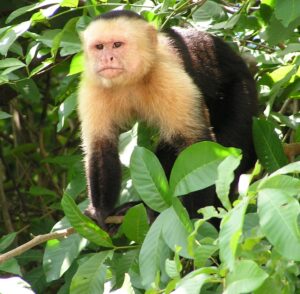
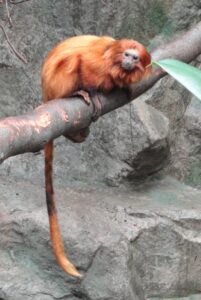
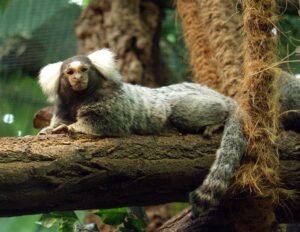
Squirrel monkeys are small, lively monkeys of South and Central American forests. They move in large, noisy troops and are among the most frequently seen monkeys on Amazon trips.
Interesting facts
- Troops can number dozens, sometimes over 100 monkeys.
- Before the breeding season, males put on weight around their shoulders and arms.
- They rub urine on their hands and feet, leaving scent trails as they move.
- Unlike many New World monkeys, their tails are not prehensile.
- They often travel with capuchin monkeys, sharing food sources.
- Their faces have a white ‘mask’ and dark muzzle.
Behaviour
Squirrel monkeys are active by day and forage mostly for insects, moving quickly through the lower and middle layers of the forest.
Breeding and young
Births in each troop are synchronised, usually in the rainy season. A single infant rides on its mother’s back.
Threats and conservation
Habitat loss, the pet trade and, for the Central American species, forest fragmentation.
Where to see it
- Manuel Antonio National Park, Costa Rica (Central American squirrel monkey)
- Pacaya-Samiria National Reserve, Peru
- Amazon lodges in Ecuador and Brazil
- Corcovado National Park, Costa Rica
Status source: IUCN Red List. Profile last reviewed September 2026.
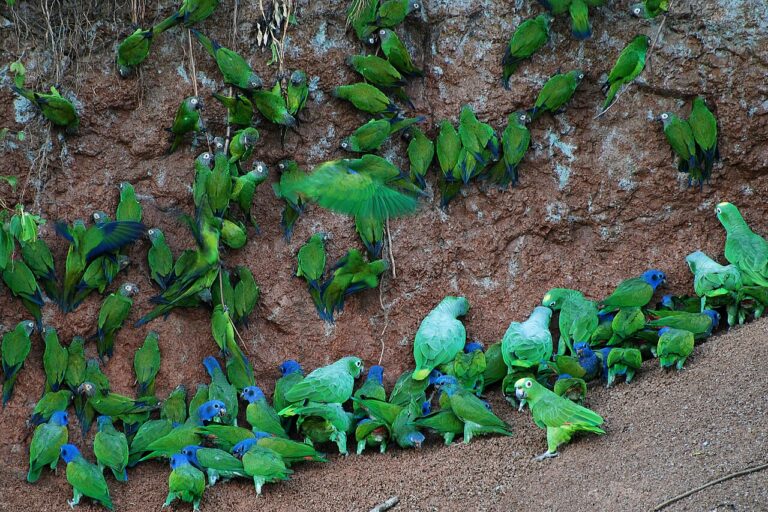 Yasuní and the Ecuadorian Amazon