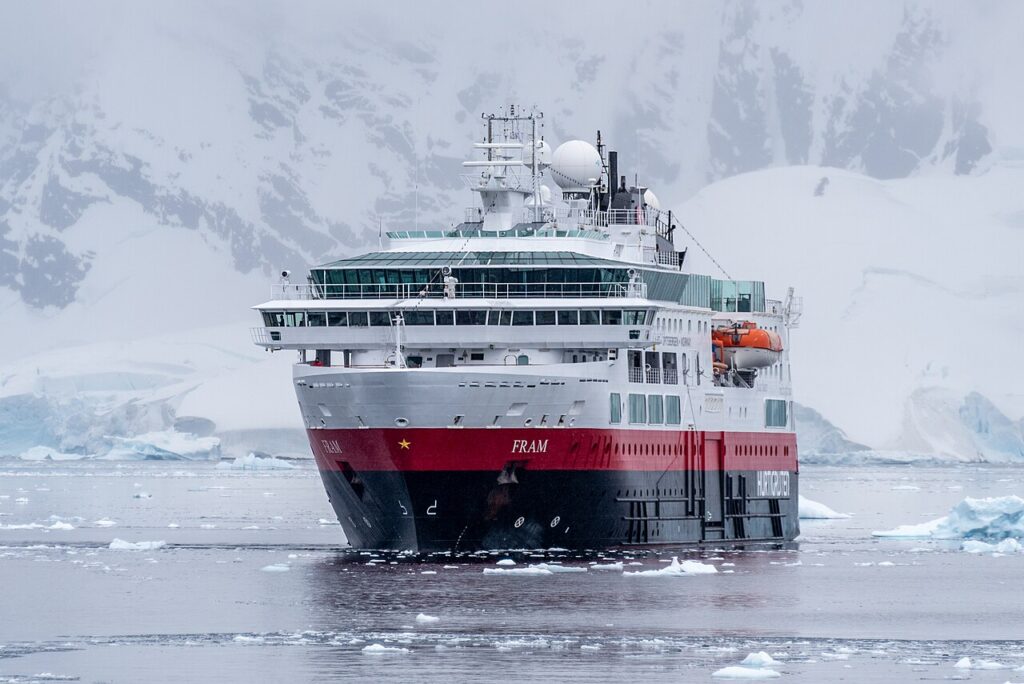
Most visitors reach Antarctica on an expedition ship from Ushuaia in Argentina, crossing the Drake Passage to the Antarctic Peninsula. The ship you choose affects how often you land, how many people share each landing, which activities you can do and your comfort on the voyage. Here is how to choose.
At a glance
| Season | November to March |
| Main departure port | Ushuaia, Argentina (also Punta Arenas, Chile, for fly-cruises) |
| Typical length | 10 to 12 days for the Peninsula; 18 to 23 days with South Georgia and the Falklands |
| Key decision | Ship size, which determines how many landings you get |
Why ship size matters
The International Association of Antarctica Tour Operators (IAATO) sets rules to protect wildlife:
- No more than 100 passengers ashore at one site at a time.
- Ships carrying more than 500 passengers may not make landings at all.
| Ship size | Landings | Notes |
|---|---|---|
| Under 100 passengers | Everyone can land at once; the most time ashore | Intimate, often more expensive |
| 100 to 200 passengers | Landings in shifts, still frequent | A good balance of comfort and access |
| 200 to 500 passengers | Shorter or fewer landings, as groups rotate | More facilities on board |
| Over 500 passengers | No landings; cruising only | Not an expedition experience |
Routes
- Antarctic Peninsula: the classic route, 10 to 12 days, with penguin colonies, whales, glaciers and seals.
- Falklands, South Georgia and Antarctica: 18 to 23 days, including South Georgia’s huge king penguin colonies. See our South Georgia guide.
- Crossing the Antarctic Circle: longer Peninsula voyages that head further south.
- Weddell Sea and Snow Hill Island: specialised voyages for emperor penguins. See our emperor penguin guide.
- Ross Sea: rare, long voyages from New Zealand or Australia to historic huts.
Fly-cruise or sail the Drake?
- Sailing the Drake Passage: about two days each way; seas can be rough, but many travellers see it as part of the adventure and a chance to watch albatrosses.
- Fly-cruise: fly from Punta Arenas to King George Island and board the ship there, skipping the Drake. More expensive and subject to weather delays.
Activities
Zodiac landings and cruises are standard. Some ships offer kayaking, camping ashore for a night, snowshoeing, stand-up paddleboarding, mountaineering, polar plunges and even submarines or helicopters on some newer luxury ships. Many activities cost extra and have limited places.
Expedition team
Look for a strong team of naturalists, historians and guides, lectures on board and a good ratio of guides to passengers. Citizen science programmes (such as counting seabirds or collecting phytoplankton samples) add depth.
Responsible choices
- Choose an IAATO member operator.
- Prefer smaller ships and operators with strong environmental policies, such as low-sulphur fuels or hybrid propulsion.
- Follow biosecurity rules: clean clothing and boots before landing to avoid introducing seeds or diseases.
Frequently asked questions
What size ship is best for Antarctica? Ships with fewer than 200 passengers offer the best balance of landings and comfort; under 100 gives the most time ashore.
Is the Drake Passage dangerous? It can be rough, but modern expedition ships cross it safely. Seasickness medication helps.
How much does an Antarctica trip cost? Most Peninsula voyages start at several thousand US dollars per person and rise steeply for longer trips, larger cabins and fly-cruises.
When is the best time to go? November for pristine snow and penguin courtship, December to January for chicks and long days, February to March for whales.
Related guides
- Antarctica expedition cruise guide
- What to pack for a polar expedition
- South Georgia: king penguins and elephant seals
- Animal profiles: Gentoo penguin, Adélie penguin, Leopard seal
Cover photo: Gordon Leggett, CC BY-SA 4.0, via Wikimedia Commons