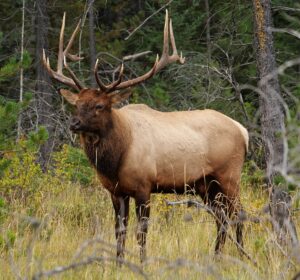
The white-tailed deer is the most widespread and abundant large mammal in the Americas. It has adapted well to living near people, in farmland and suburbs as well as forests.
Interesting facts
- When alarmed, it raises its tail to flash the white underside, warning other deer.
- It can leap over 2 metres high and 9 metres long.
- Males grow antlers each year and shed them in winter.
- The tiny Key deer of the Florida Keys is an endangered subspecies.
- Too many deer can prevent forests from regenerating.
- Collisions with deer are a major cause of road accidents in North America.
Behaviour
White-tailed deer are most active at dawn and dusk. Females live in family groups, while males live alone or in small groups except during the autumn rut, when they fight with their antlers.
Breeding and young
After about seven months, females give birth to one to three spotted fawns, usually twins. Fawns hide in vegetation while their mothers feed nearby.
Threats and conservation
The species is abundant. It is hunted in many areas and affected by chronic wasting disease, road deaths and harsh winters.
Where to see it
- Cades Cove, Great Smoky Mountains National Park
- Shenandoah National Park, Virginia
- National Key Deer Refuge, Florida
- Parks and suburbs across eastern North America
Status source: IUCN Red List. Profile last reviewed September 2026.