The great white shark is one of the ocean’s top predators and one of its most misunderstood animals. Its populations have declined in many regions through fishing and bycatch, and it is protected in many countries.
Interesting facts
- The great white is the largest predatory fish.
- It keeps its body warmer than the surrounding water, which helps it hunt in cold seas.
- Great whites sometimes leap completely out of the water when attacking seals, called breaching.
- They have around 300 serrated teeth in several rows, replaced throughout life.
- Tagged sharks have crossed entire oceans; one travelled from South Africa to Australia and back in nine months.
- Sharks kill very few people a year; people kill tens of millions of sharks.
Behaviour
Great whites often patrol near seal colonies and ambush prey from below. They migrate long distances, sometimes gathering at offshore sites nicknamed ‘white shark cafés’.
Breeding and young
Females give birth to live young, usually 2 to 10 pups, after a long gestation estimated at 12 to 18 months. Great whites mature late, at about 26 to 33 years for females.
Threats and conservation
Bycatch, targeted fishing for fins, jaws and teeth, shark-control nets, and declining prey.
Where to see it
- Gansbaai, South Africa
- Neptune Islands, South Australia
- Guadalupe Island, Mexico (cage diving)
- Cape Cod, USA
Status source: IUCN Red List. Profile last reviewed September 2026.
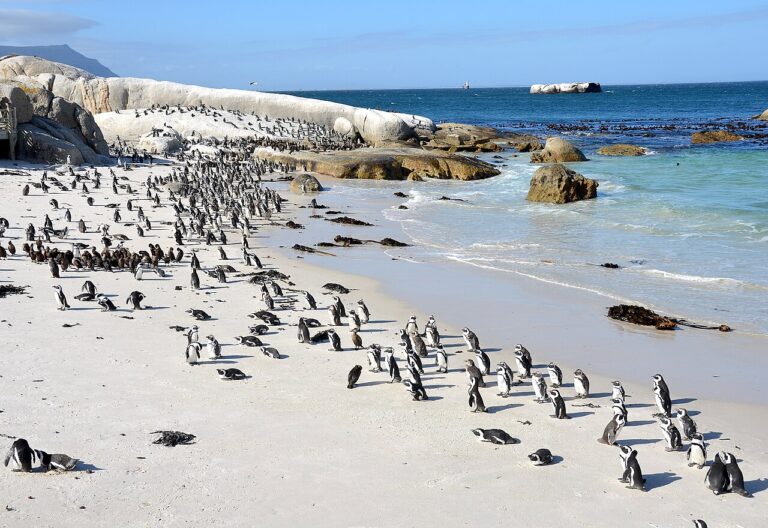 Cape Town Wildlife: Penguins, Whales and Great White Sharks