The walrus is a huge, tusked marine mammal of the Arctic and the only living member of its family. It depends on sea ice as a platform for resting and giving birth close to its shallow feeding grounds.
Interesting facts
- Both males and females have tusks, which can reach about 1 m in males.
- The scientific name Odobenus means ‘tooth walker’, because walruses use their tusks to haul themselves onto ice.
- Walruses can slow their heart rate to conserve heat in icy water.
- Their skin can look pink when they are warm, as blood flows near the surface.
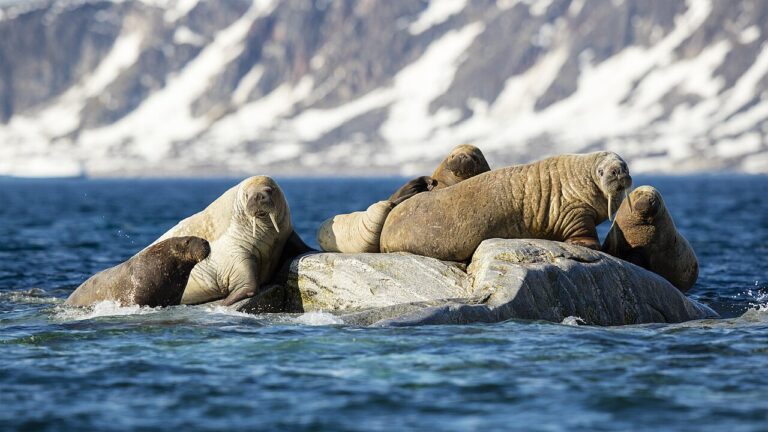
- Tens of thousands of walruses may crowd onto a single beach when sea ice is missing.
- An air sac in the neck acts as a float, letting them sleep upright in the water.
Behaviour
Walruses are highly social and gather in large groups on ice floes and beaches, called haul-outs. Males use their tusks in displays and fights. Walruses can dive for about 30 minutes, although most dives are shorter.
Breeding and young
Walruses mate in winter. After about 15 months, including a delay before the embryo implants, a single calf is born on the ice. Calves stay with their mothers for two years or more.
Threats and conservation
Loss of sea ice due to climate change forces walruses onto crowded beaches, where stampedes can kill calves. Other threats include shipping, oil and gas development and hunting.
Where to see it
- Svalbard, Norway
- Round Island, Walrus Islands State Game Sanctuary, Alaska
- Foxe Basin and Igloolik, Nunavut, Canada
- Arctic expedition cruises to Franz Josef Land and Greenland
Status source: IUCN Red List. Profile last reviewed September 2026.
Where to see the walrus
 Svalbard Polar Bear ExpeditionsSvalbard is Europe's best place to see polar bears in the wild. How expedition cruises work and when…
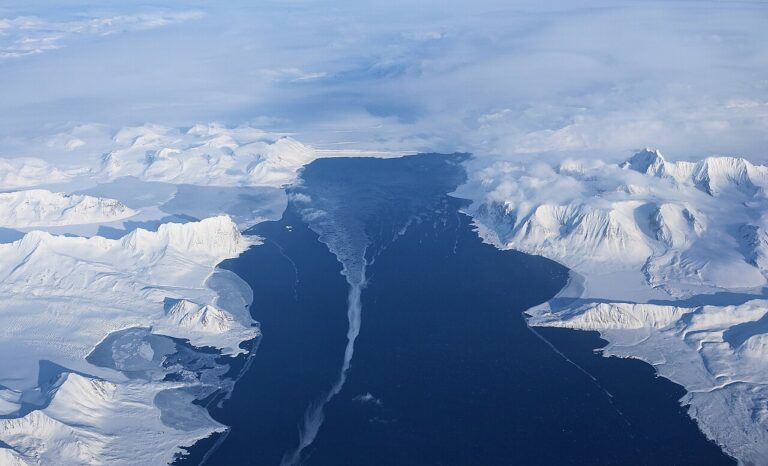 Arctic Wildlife Cruises: Svalbard, Greenland and CanadaArctic expedition cruises offer polar bears, walruses, whales and icebergs. How Svalbard, Greenland and the Canadian Arctic compare.