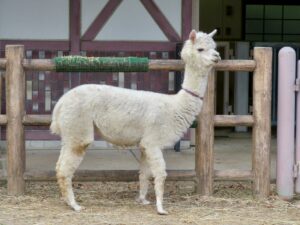
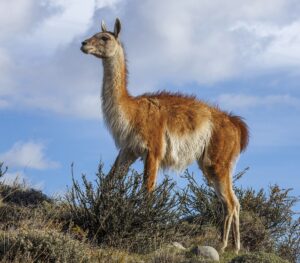
The vicuña is a slender, wild camelid of the high Andes and the ancestor of the alpaca. Its ultra-fine wool once pushed it close to extinction, but protection and community management have brought a remarkable recovery.
Interesting facts
- It is the smallest member of the camel family.
- The vicuña is the national animal of Peru and appears on its coat of arms.
- Vicuñas can only be shorn every two to three years.
- The Inca rounded up vicuñas for shearing in ceremonies called chaccu, a tradition still practised today.
- Poaching reduced numbers to a few thousand in the 1960s; today there are hundreds of thousands.
- Its lower front teeth grow continuously, like a rodent’s.
Behaviour
Vicuñas live in family groups of a male and several females, in bachelor groups, or as solitary males. Families defend feeding and sleeping territories.
Breeding and young
After about 11 months, a single cria is born and can stand and run within minutes.
Threats and conservation
Poaching for wool, competition with livestock, mange and climate change.
Where to see it
- Pampa Galeras National Reserve, Peru
- Salinas y Aguada Blanca National Reserve, near Arequipa, Peru
- Lauca National Park, Chile
- Eduardo Avaroa Andean Fauna National Reserve, Bolivia
Status source: IUCN Red List. Profile last reviewed September 2026.