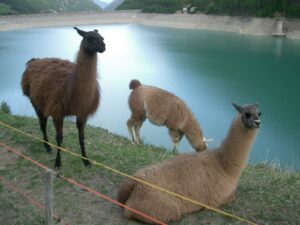
The alpaca is a small, domesticated camelid of the Andes, prized for its soft, warm fleece. It has been central to Andean cultures for thousands of years and is now kept on farms around the world.
Interesting facts
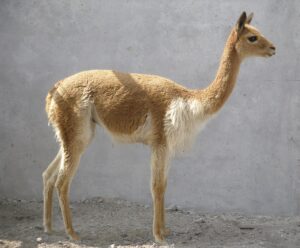
- Alpacas were domesticated from wild vicuñas about 6,000–7,000 years ago.
- Most of the world’s alpacas live in Peru.
- There are two breeds: the fluffy huacaya and the silky, long-haired suri.
- Alpacas are smaller than llamas and bred for fibre rather than as pack animals.
- They hum to communicate with each other.
- Soft, padded feet make them gentle on fragile soils.
Behaviour
Alpacas are gentle, social herd animals that feel stressed when alone. They use shared dung piles and communicate with hums, clucks and alarm calls.
Breeding and young
After about 11 and a half months, a single cria is born. It can stand and nurse within an hour or two.
Threats and conservation
As a domestic animal, the alpaca is not threatened, although Andean herders face climate change and drought.
Where to see it
- Colca Canyon and Arequipa region, Peru
- Puno and the Lake Titicaca area, Peru
- Cusco region, Peru
- Alpaca farms worldwide
Status source: IUCN Red List. Profile last reviewed September 2026.