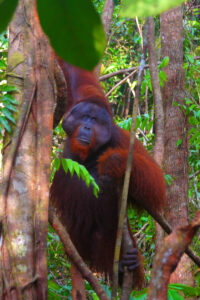
The Sumatran orangutan is one of three orangutan species and one of the most endangered great apes. It lives almost entirely in the trees of northern Sumatra’s rainforests, where it plays a vital role as a seed disperser.
Interesting facts
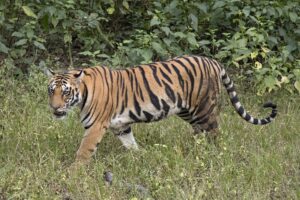
- Sumatran orangutans are the most arboreal of the great apes and rarely come to the ground, possibly because of tigers.
- Some populations use sticks to extract seeds from spiky fruits and insects from tree holes.
- Adult males may develop large cheek pads called flanges and give loud ‘long calls’.
- About 14,000 are thought to remain in the wild.
- They have lighter, longer reddish hair and longer beards than Bornean orangutans.
- Young orangutans learn skills from their mothers over many years.
Behaviour
Sumatran orangutans are more social than Bornean orangutans, sometimes gathering in fruiting trees. They move slowly through the canopy, build nests of branches every night and use leaves as umbrellas in rain.
Breeding and young
After a gestation of about eight and a half months, a single infant is born. It stays with its mother for seven to nine years, learning which foods to eat and how to find them.
Threats and conservation
Forest loss for palm oil and other plantations, roads, mining and fires, as well as the illegal pet trade and killing in conflicts with farmers.
Where to see it
- Bukit Lawang, Gunung Leuser National Park, Sumatra
- Ketambe Research Station area, Gunung Leuser
- Tangkahan, North Sumatra
- Choose licensed guides who do not feed or touch orangutans
Status source: IUCN Red List. Profile last reviewed September 2026.
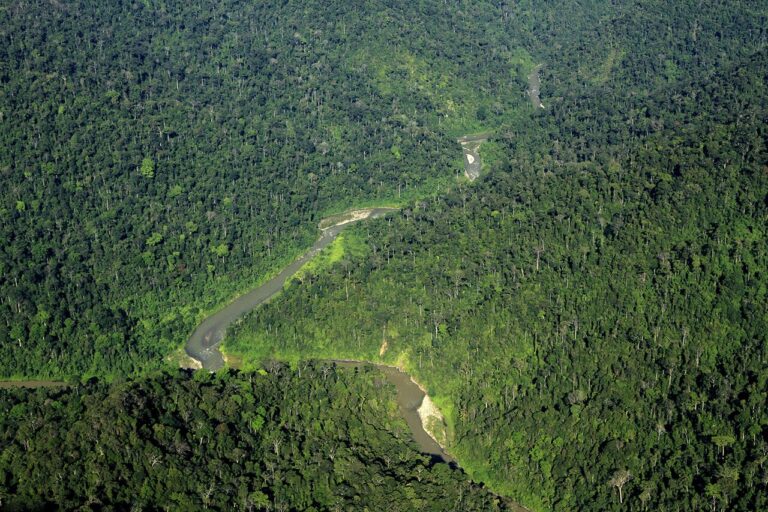 Gunung Leuser: Sumatran Orangutans and Jungle Trekking