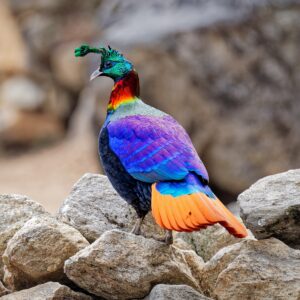
The Indian peafowl is a large pheasant native to South Asia, famous for the male’s spectacular fan of eye-spotted feathers. It is widespread and often lives alongside people in villages and temples.
Interesting facts
- The Indian peafowl is the national bird of India.
- Only males (peacocks) have the long, iridescent train.
- Males shake their raised trains to make a rustling sound that females can detect.
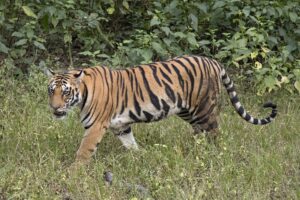
- Peafowl give loud alarm calls that often warn of tigers and leopards.
- They roost high in trees at night.
- Peafowl are sacred in Hindu culture and linked with the god Kartikeya.
Behaviour
Peafowl forage on the ground in small groups. In the breeding season, males display to females by raising and quivering their trains. Their loud ‘may-awe’ calls carry far, especially before rain.
Breeding and young
Females lay three to six eggs in a shallow scrape on the ground and incubate them for about 28 days. Chicks can walk and feed within a day.
Threats and conservation
The species is common and protected in India. Local threats include poaching for meat and feathers, and poisoning from pesticide-treated seeds.
Where to see it
- Ranthambore National Park, India
- Keoladeo National Park, Bharatpur, India
- Yala National Park, Sri Lanka
- Villages and temples across India
Status source: IUCN Red List. Profile last reviewed September 2026.