The ruby-throated hummingbird is a tiny, jewel-like bird that brings colour to gardens across eastern North America in summer. Despite weighing about as much as a coin, it makes one of the most remarkable migrations of any bird.
Interesting facts
- It is the only hummingbird that regularly breeds in eastern North America.
- Its wings beat about 50 times a second.
- Its heart can beat over 1,000 times a minute in flight.
- Only males have the glittering red throat, called a gorget.
- Hummingbirds can hover and fly backwards.
- At night, they can enter a state called torpor, lowering their body temperature to save energy.
Behaviour
Ruby-throats are solitary and very territorial, chasing other hummingbirds from flowers and feeders. They feed constantly during the day to fuel their fast metabolism.
Breeding and young
The female builds a tiny cup nest from plant down and spider silk, camouflaged with lichen. She lays two eggs the size of peas and raises the chicks alone. They fledge after about three weeks.
Threats and conservation
The species is common. Threats include habitat loss, pesticides reducing insects, collisions with windows and changes in flowering times due to climate change.
Where to see it
- Gardens with native flowers and nectar feeders in eastern North America
- Fort Morgan, Alabama, during migration
- Point Pelee National Park, Ontario, in spring
- Costa Rica and Mexico in winter
Status source: IUCN Red List. Profile last reviewed September 2026.
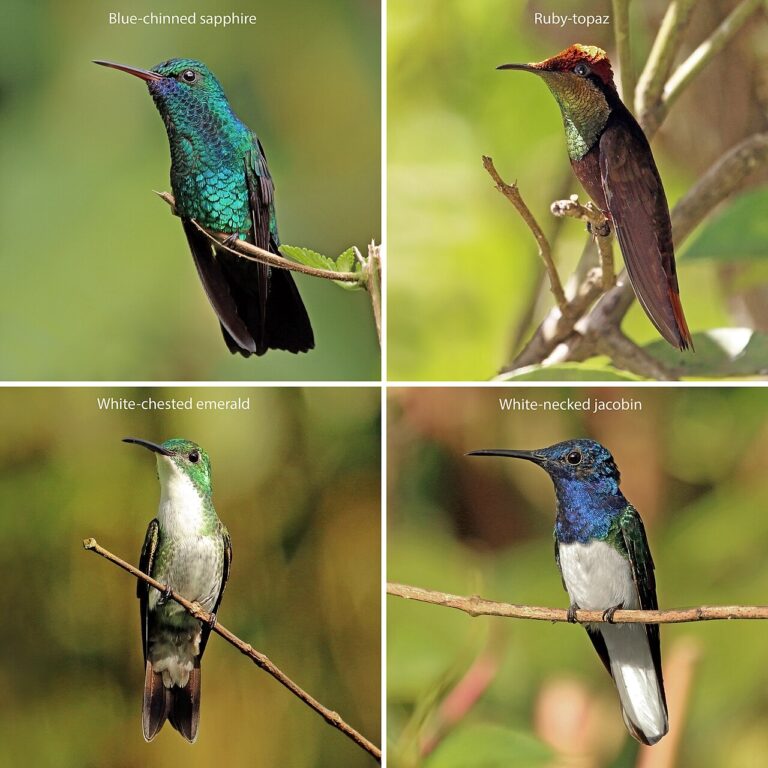 Best Hummingbird Destinations in the Americas