The striped skunk is a small, black-and-white mammal found across North America, famous for its powerful defensive spray. It is common in suburbs and farmland, where it eats insects and rodents.
Interesting facts
- Skunks give warnings before spraying: stamping their feet, hissing and raising their tails.
- The spray contains sulphur compounds called thiols.
- After spraying, a skunk needs days to refill its glands.
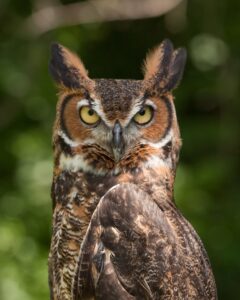
- Great horned owls are among the few predators that regularly eat skunks.
- Skunks eat many garden pests, such as beetle grubs.
- Their bold black-and-white pattern warns predators to stay away.
Behaviour
Skunks are mostly nocturnal and solitary, although several may share a den in winter. They forage by digging for insects and grubs with their long front claws.
Breeding and young
After about two months, females give birth to four to eight kits in a den. Kits can spray from a young age.
Threats and conservation
Skunks are common. They suffer from road deaths and diseases such as rabies and distemper.
Where to see it
- Suburbs and farmland across North America at night
- Parks and campgrounds
- Look for their small, shallow digging holes in lawns
- Keep a respectful distance
Status source: IUCN Red List. Profile last reviewed September 2026.