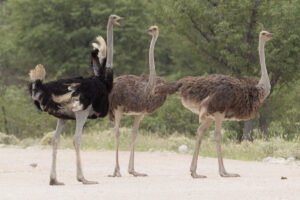
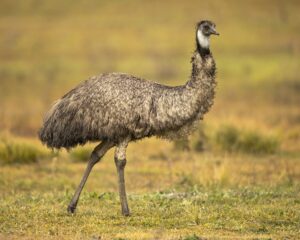
The greater rhea is a large, flightless bird of South American grasslands, related to ostriches and emus. It is a fast runner and an important part of the pampas and cerrado ecosystems.
Interesting facts
- It is the largest bird in South America.
- Rheas cannot fly, but they run fast and zigzag to escape predators.
- They use their wings for balance when turning.
- A small wild population has established itself in northern Germany after rheas escaped from a farm in 2000.
- Rheas often graze near herds of deer or cattle.
- Their feathers have been used to make feather dusters.
Behaviour
Rheas live in flocks outside the breeding season. In spring, males gather harems of females, dig nests and do all the incubating.
Breeding and young
Several females lay their eggs in one male’s nest. He incubates them for about six weeks and cares for the chicks for months.
Threats and conservation
Conversion of grasslands to farmland, hunting and egg collection, and pesticides.
Where to see it
- Pantanal, Brazil
- Emas and Serra da Canastra national parks, Brazil
- Pampas of Buenos Aires province, Argentina
- Grasslands of Uruguay
Status source: IUCN Red List. Profile last reviewed September 2026.