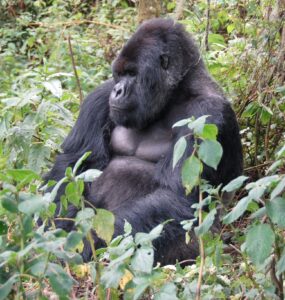
The bonobo is a great ape found only in the rainforests of the Democratic Republic of the Congo. Often called the peaceful ape, it lives in female-dominated societies and is famous for its tolerance and empathy, which give insights into the evolution of human behaviour.
Interesting facts
- Bonobos and chimpanzees are humans’ closest living relatives, sharing almost 99 percent of our DNA.
- The Congo River separates bonobos from chimpanzees and may have driven the split between the two species.
- Bonobos have a slimmer build, longer legs and a darker face than chimpanzees.
- They often walk upright on two legs.
- Bonobos share food with strangers, a trait rare among animals.
- Scientists first described the bonobo in 1929, from a skull kept in a Belgian museum.
Behaviour
Bonobos live in communities of up to about 100 individuals that split into smaller groups to forage. Strong alliances between females keep males in check. They build nests in trees each night.
Breeding and young
Females give birth to a single infant about every four to five years after a gestation of about eight months. Sons stay in their birth community and remain close to their mothers for life, while daughters move to other communities.
Threats and conservation
Hunting for bushmeat, habitat loss from logging and agriculture, and civil conflict. Their slow reproduction means populations recover very slowly.
Where to see it
- Lola ya Bonobo sanctuary, Kinshasa, DRC
- Salonga National Park, DRC (very limited tourism)
- Research and community reserves such as the Bonobo Peace Forest
- Accredited zoos with conservation programmes
Status source: IUCN Red List. Profile last reviewed September 2026.