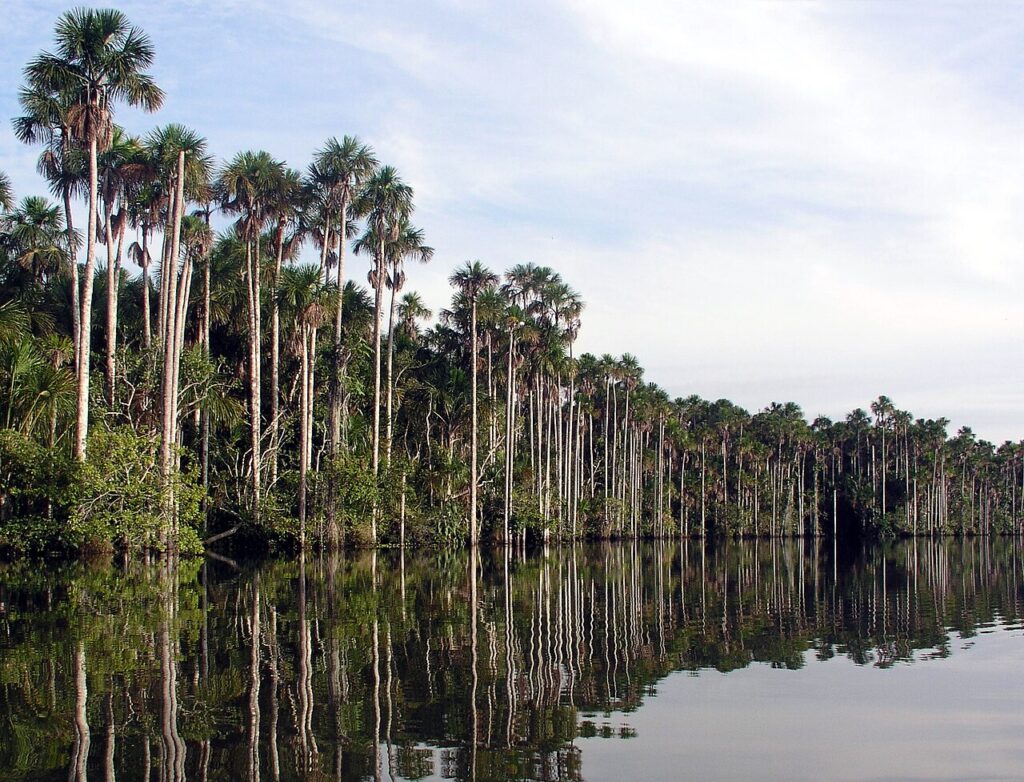
South-eastern Peru is one of the most biodiverse regions on Earth. Two protected areas stand out for wildlife travellers: the Tambopata National Reserve and neighbouring Bahuaja-Sonene National Park, easily reached from the town of Puerto Maldonado, and Manu National Park, a UNESCO World Heritage Site stretching from Andean grasslands to lowland rainforest.
At a glance
| Best time | May to October (dry season); clay licks busiest from about August to December |
| Getting there | Tambopata: fly from Lima or Cusco to Puerto Maldonado. Manu: overland from Cusco or fly to Boca Manu |
| Time needed | Tambopata: 3 to 5 nights. Manu: 6 to 9 days |
| Big draws | Macaw clay licks, giant otters, monkeys, cloud forest birds |
| Good for | First Amazon trips (Tambopata), dedicated naturalists (Manu) |
Tambopata
- Macaw clay licks: at dawn, hundreds of parrots and macaws, including scarlet, red-and-green and blue-and-yellow macaws, gather at riverbank clay cliffs to eat the soil, which provides sodium and may help neutralise toxins in their diet. The Chuncho and Colorado clay licks are among the largest in the Amazon. See our scarlet macaw profile.
- Oxbow lakes such as Sandoval and Tres Chimbadas hold families of giant otters, hoatzins and black caimans. See our giant otter profile.
- Canopy towers for toucans, monkeys and raptors.
- Monkeys: howler, capuchin, squirrel and spider monkeys, and tamarins.
- Other wildlife: capybaras, tapirs at mammal licks at night, and occasionally jaguars along the riverbanks.
Manu
- Manu covers about 17,000 km², from high Andean grasslands at over 4,000 m to lowland forest at about 300 m, with extraordinary diversity along the way.
- The road from Cusco descends through cloud forest, where Andean cocks-of-the-rock display at leks, and woolly monkeys and many hummingbirds live.
- The lowlands include oxbow lakes such as Cocha Salvador, with giant otters, and clay licks.
- Most of Manu’s core is closed to tourism; visitors stay in the “cultural zone” and the reserved zone, with licensed operators.
Tambopata or Manu?
- Choose Tambopata for a shorter, easier trip with excellent wildlife and comfortable lodges.
- Choose Manu for a longer adventure through different altitudes, and for the chance to experience one of the world’s most pristine rainforests.
When to go
- May to October: dry season; easier trails and lower rivers. Clay lick activity picks up from about August.
- November to April: rainy season; lush forest and fruiting trees, but more rain and mud.
Getting there
- Tambopata: fly to Puerto Maldonado (about 1.5 hours from Lima, 45 minutes from Cusco), then travel by boat to your lodge.
- Manu: drive from Cusco (a full day, through cloud forest) or fly to Boca Manu when flights operate, followed by boat trips.
Frequently asked questions
When is the best time to see the macaw clay licks? Activity peaks from about August to December, early in the morning, depending on the weather.
Can I see giant otters in Tambopata? Yes, especially at Lake Sandoval and Tres Chimbadas, where families are often seen.
How long do I need in Manu? At least six days to experience the cloud forest and the lowlands.
Is Tambopata good for a first Amazon trip? Yes. It is easy to reach, has excellent lodges and offers great wildlife.
Related guides
- Amazon rainforest lodges: how to choose
- Yasuní and the Ecuadorian Amazon
- Best hummingbird destinations
- Animal profiles: Scarlet macaw, Giant otter, Capybara
Cover photo: No machine-readable author provided. Xauxa assumed (based on copyright claims)., CC BY 2.5, via Wikimedia Commons