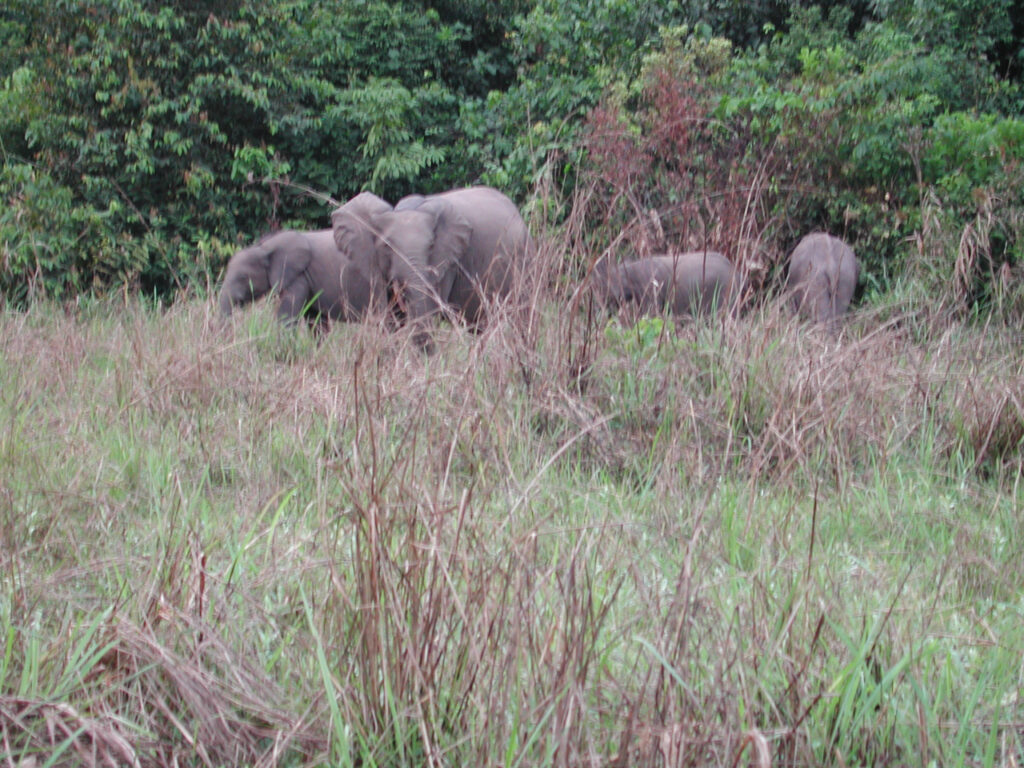
Odzala-Kokoua National Park, in the north-west of the Republic of Congo, protects about 13,500 km² of Congo Basin rainforest, savanna and swamp. It is one of Africa’s oldest national parks (created in 1935) and one of the best places in the world to see western lowland gorillas in the wild. Since 2010 it has been managed by African Parks with the Congolese government.
At a glance
| Best time | June to September and December to February (drier months) |
| Getting there | International flights to Brazzaville, then a charter flight to the park |
| Time needed | Usually 7 to 8 nights on a set itinerary |
| Big draws | Western lowland gorillas, forest elephants, bais, rainforest |
| Good for | Experienced travellers, primate enthusiasts |
Western lowland gorillas
- Western gorillas are more numerous than mountain gorillas, but they live in dense, remote forests and are much harder to see. They have also been hit hard by Ebola, poaching and habitat loss, and are listed as Critically Endangered.
- A small number of gorilla groups near Odzala’s forest camps are habituated. Researchers, originally led by primatologists Magdalena Bermejo and German Illera, spent years getting them used to people.
- Tracking groups are small (usually four people), time with the gorillas is limited to one hour, and face masks are required. The minimum age is usually 15.
- Treks can involve wading through swamps and walking through dense, humid forest.
Other wildlife
- Forest elephants: smaller than savanna elephants, with straighter tusks. They visit forest clearings called bais to feed on minerals.
- Bais also attract forest buffalo, sitatunga, red river hogs and occasionally bongo.
- Primates: chimpanzees, black-and-white colobus, grey-cheeked mangabeys and moustached monkeys.
- Birds: grey parrots, hornbills, Pel’s fishing owl and many forest species.
How trips work
Most visitors book a fixed-departure package that includes charter flights from Brazzaville and stays at two or three camps: a forest camp for gorilla tracking, a camp overlooking a bai, and a camp on the Lekoli River for boat trips and walks. These trips are expensive, reflecting the remote location and the cost of running camps in the rainforest.
When to go
- June to September: the main dry season, often considered the best time.
- December to February: a shorter dry season.
- Rain is possible year-round; expect humidity and mud.
Other places to see western lowland gorillas
- Dzanga-Sangha (Central African Republic): habituated gorillas and the famous Dzanga Bai with forest elephants. Check current travel advice.
- Loango National Park (Gabon): habituated gorillas, forest elephants on beaches and humpback whales offshore.
- Nouabalé-Ndoki (Republic of Congo): remote forest and the Mbeli Bai research site.
Frequently asked questions
How is lowland gorilla trekking different from mountain gorilla trekking? Lowland gorillas live in flatter, swampier forest and are harder to follow. Visits are more exclusive and expensive, and sightings can be through thicker vegetation.
Is the Republic of Congo safe to visit? Tourist trips to Odzala operate with experienced operators. Check your government’s current travel advice.
How fit do I need to be? Moderately fit, and prepared for heat, humidity, mud and wading through water.
How much does an Odzala trip cost? Packages typically cost many thousands of US dollars per person, including charter flights. Ask specialist operators for current prices.
Related guides
- Bwindi gorilla trekking guide
- Volcanoes National Park, Rwanda
- Gorilla trekking in Uganda vs Rwanda
- Animal profiles: Western gorilla, Chimpanzee, African grey parrot
Cover photo: (c) John P Friel, some rights reserved (CC BY), CC BY 4.0, via Wikimedia Commons