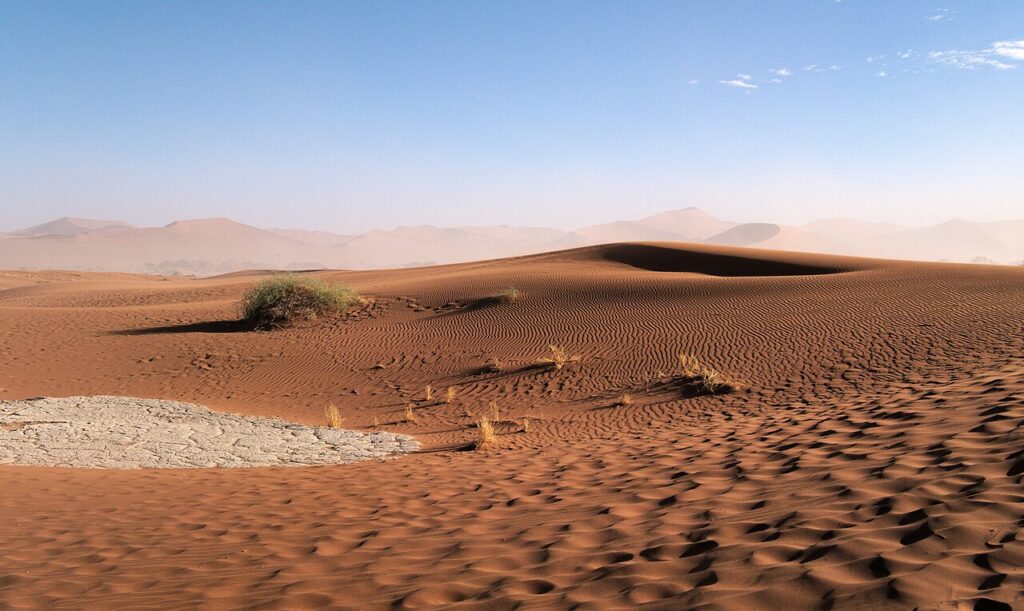
Namibia is one of the best countries in Africa for a self-drive safari: roads are good, the country is safe and well organised, and the landscapes are extraordinary. This two-week route loops from Windhoek through the dunes of Sossusvlei, the Atlantic coast, the desert elephants of Damaraland and the waterholes of Etosha National Park.
At a glance
| Best time | May to October (dry season) |
| Distance | About 2,800 to 3,200 km |
| Vehicle | A high-clearance 4×4 or SUV is recommended |
| Big draws | Dunes, Etosha waterholes, desert elephants, coast wildlife, cheetahs |
| Good for | Independent travellers, photographers, families with older children |
The route
| Day | Route | Highlights |
|---|---|---|
| 1 | Arrive in Windhoek | Collect your vehicle; stock up on supplies |
| 2–3 | Windhoek to Sossusvlei (Sesriem) | Sunrise at Dune 45, Deadvlei, Sesriem Canyon; oryx and springbok on the gravel plains |
| 4–5 | Sossusvlei to Swakopmund | Walvis Bay lagoon flamingos, a marine cruise for dolphins and seals, a Living Desert tour for desert reptiles |
| 6 | Swakopmund to Damaraland | Cape Cross seal colony, Brandberg |
| 7–8 | Damaraland | Desert elephants, rhino tracking, Twyfelfontein rock engravings |
| 9–11 | Etosha National Park | Two nights at Okaukuejo for its floodlit waterhole, then eastern Etosha |
| 12 | Etosha to Okonjima | AfriCat Foundation; tracking cheetahs or leopards |
| 13 | Okonjima to Windhoek | Relax; last night in the city |
| 14 | Depart |
Wildlife along the way
- Sossusvlei: gemsbok (oryx), springbok, ostriches, jackals and the tiny Namib desert reptiles. See our gemsbok profile.
- Coast: huge colonies of Cape fur seals at Cape Cross, flamingos and pelicans at Walvis Bay, and Heaviside’s and bottlenose dolphins.
- Damaraland: desert-adapted elephants, black rhinos and giraffes. See our Damaraland guide.
- Etosha: lions, black rhinos, elephants, giraffes, zebras and many antelope at waterholes. See our Etosha guide.
- Okonjima: rescued and rehabilitated cheetahs and leopards in a large nature reserve.
Driving tips
- Most roads are gravel. Keep to 80 km/h or less, slow down on corners and loose surfaces, and never brake hard.
- Avoid driving after dark: animals on the road are a serious hazard.
- Fill up whenever you can; fuel stations can be hundreds of kilometres apart.
- Carry two spare tyres, at least 10 litres of water and some food.
- Traffic drives on the left.
- Check your rental covers gravel roads, tyres and windscreens.
What to book early
- Etosha’s rest camps inside the park, especially Okaukuejo, Halali and Namutoni, and Sesriem camp for early access to the dunes. These book up months ahead for July to October.
- Rhino tracking in Damaraland and activities at Okonjima.
- Your vehicle: 4×4s with camping equipment are popular.
When to go
- May to October: dry season; cool, clear days and excellent wildlife at Etosha’s waterholes. Nights in the desert can be very cold.
- November to April: hot, with occasional rain; green scenery and baby animals, but wildlife disperses at Etosha.
Frequently asked questions
Is Namibia safe for a self-drive? Yes, Namibia is one of Africa’s safest self-drive countries. The main risks are road accidents on gravel, so drive carefully.
Do I need a 4×4 in Namibia? Not strictly for this route, but a high-clearance vehicle is strongly recommended for comfort and safety on gravel roads.
Is 14 days enough for Namibia? It covers the classic highlights. With more time, add the Caprivi (Zambezi Region), the Skeleton Coast or the Fish River Canyon.
Can I camp instead of staying in lodges? Yes. Many vehicles come with rooftop tents, and Namibia has excellent campsites.
Related guides
- Etosha National Park guide
- Desert elephants and rhinos of Damaraland
- Self-drive vs guided safari
- Animal profiles: Gemsbok, Springbok, Cheetah
Cover photo: Daniel Kraft, CC BY-SA 3.0, via Wikimedia Commons