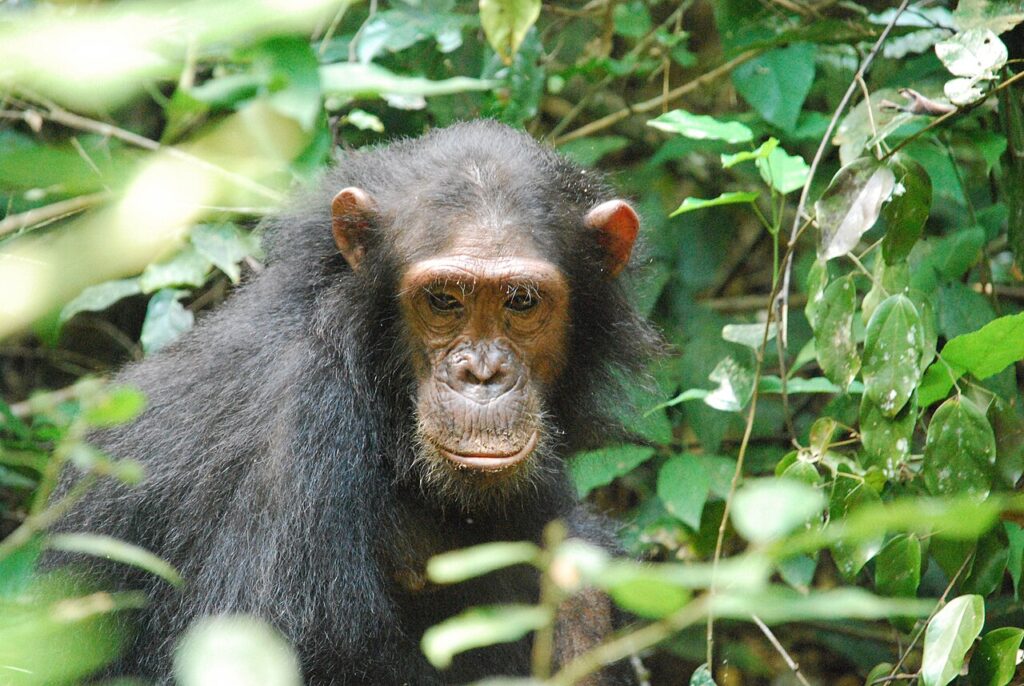
On the eastern shore of Lake Tanganyika, the longest freshwater lake in the world, two national parks protect chimpanzees that have been studied for more than 60 years. Gombe Stream is where Jane Goodall began her research in 1960. Mahale Mountains, further south, is home to a community studied by Japanese researchers since the 1960s. Both offer intimate encounters with habituated chimpanzees in a spectacular setting of forest, mountains and beaches.
At a glance
| Best time | July to October (dry season) |
| Getting there | Gombe: boat from Kigoma. Mahale: light aircraft and boat |
| Time needed | 2 to 4 nights |
| Big draws | Habituated chimpanzees, research history, lake scenery |
| Good for | Primate lovers, combining with Katavi or a northern safari |
Mahale Mountains National Park
Mahale covers about 1,600 km², rising from white beaches to peaks over 2,400 m. There are no roads: you arrive by boat and explore on foot.
- About 800 to 1,000 chimpanzees live in the park. Visitors track the habituated “M-group”, which is usually found within a few hours’ walk of the lakeshore.
- Other primates include red colobus, red-tailed monkeys and yellow baboons. Leopards live in the forest but are rarely seen.
- The lodges are simple but beautiful, with snorkelling and kayaking in the clear lake between treks.
Gombe Stream National Park
At about 35 km², Gombe is Tanzania’s smallest national park: steep valleys running down to the lake north of Kigoma.
- The chimpanzees are descended from those Jane Goodall first observed, and the families are well known. Research continues through the Jane Goodall Institute.
- Olive baboons, red-tailed and blue monkeys and red colobus are common, and the forest birding is good.
- Accommodation is limited to a small lodge and park rest houses.
Trekking rules
Rules protect chimpanzees from human diseases and disturbance:
- Time with the chimpanzees is limited to one hour.
- Keep at least 7 to 10 metres away, wear a face mask when close, and do not eat, drink or smoke near the chimps.
- Do not trek if you have a cold, flu or other infectious illness.
- A minimum age applies (usually 12 or older) and group sizes are small.
When to go
- July to October: the dry season, when chimpanzees often move to lower slopes and are easier to find. Late in the dry season can be excellent at Mahale.
- November to February: short rains; trekking continues but paths are muddy.
- March to May: long rains. Many Mahale lodges close.
Getting there
- Gombe: fly to Kigoma (flights from Dar es Salaam), then take a boat 1 to 2 hours north along the lake.
- Mahale: scheduled light aircraft fly a few times a week, often via Katavi National Park or Ruaha, followed by a boat transfer of about 90 minutes. Charter flights are also possible.
Costs and permits
Park fees are charged per person per 24 hours. At the time of writing, Gombe’s fee for foreign adults is around US$100 plus VAT per day and Mahale’s is slightly lower. Flights make Mahale one of Tanzania’s more expensive trips, though packages that combine it with Katavi can offer value. Check current TANAPA rates.
Sample itinerary: Katavi and Mahale in 7 nights
| Days | Plan |
|---|---|
| 1–3 | Fly from Arusha to Katavi National Park: huge herds of buffalo, hippos crowded in shrinking pools, lions |
| 4–7 | Fly to Mahale; boat to camp; daily chimpanzee treks, snorkelling and dhow trips on the lake |
Tips
- Wear sturdy shoes with grip and long trousers: the slopes are steep and slippery.
- Bring a camera that works well in low light, and a lens hood; flash photography is not allowed.
- Allow at least two treks in Mahale. The chimps range widely and some days need longer walks.
- Combine Gombe with a visit to Kigoma and the Jane Goodall Institute’s community projects.
Frequently asked questions
Is Gombe or Mahale better for chimpanzees? Both offer excellent sightings. Mahale is more remote, with a larger chimpanzee community and a wilder setting. Gombe is easier and cheaper to reach and has a unique research history.
How close can you get to chimpanzees? Rules require at least 7 to 10 metres, but the chimps sometimes pass closer. Step back and let them move freely.
How fit do I need to be? Moderately fit. Treks can take from 30 minutes to several hours on steep, forested slopes.
Can I combine chimpanzee trekking with a safari? Yes. Mahale pairs naturally with Katavi or Ruaha, and Gombe can be added to a northern circuit safari with flights via Dar es Salaam or Arusha.
Related guides
- Kibale Forest chimpanzee trekking guide
- Ruaha and Nyerere: Tanzania’s wild south
- Nyungwe Forest: chimpanzees and colobus
- Animal profile: Chimpanzee
Cover photo: Roland, CC BY-SA 2.0, via Wikimedia Commons