The wild turkey is a large game bird of North American forests and the wild ancestor of the domestic turkey. Its recovery is one of North America’s great wildlife comebacks.
Interesting facts
- Unlike most farm turkeys, wild turkeys can fly strongly for short distances.
- Males gobble loudly in spring to attract females, and the call carries over a kilometre.
- A male’s bare head can change colour between red, white and blue.
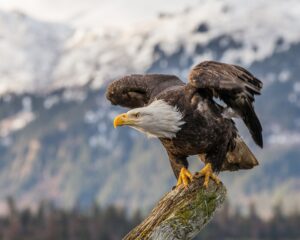
- Benjamin Franklin called the turkey a ‘more respectable’ bird than the bald eagle.
- Turkeys were domesticated in Mexico over 2,000 years ago.
- Groups of wild turkeys now roam many suburbs, including around Boston.
Behaviour
Turkeys live in flocks and forage on the ground by day, roosting in trees at night. In spring, males strut with fanned tails to attract females.
Breeding and young
Females lay about 10 to 14 eggs in a ground nest and incubate them for about four weeks. The chicks, called poults, leave the nest within a day.
Threats and conservation
The species is abundant. It is hunted under regulation.
Where to see it
- Cades Cove, Great Smoky Mountains National Park
- Shenandoah National Park, Virginia
- Suburbs of Boston and other northeastern cities
- Texas Hill Country
Status source: IUCN Red List. Profile last reviewed September 2026.