The whooping crane is North America’s tallest bird and one of its rarest. Its recovery from the brink of extinction is one of the continent’s best-known conservation stories.
Interesting facts
- It is the tallest bird in North America.
- Its loud, trumpeting call can be heard several kilometres away.
- The natural flock migrates about 4,000 km between Canada and Texas.
- Young cranes in one project were taught a migration route by following ultralight aircraft.
- Pairs mate for life and perform elaborate dances.
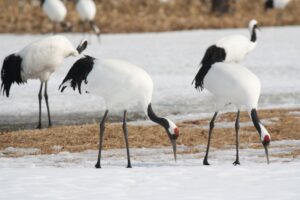
- Adults are white with black wingtips and a red crown.
Behaviour
Whooping cranes live in pairs and family groups and defend territories on both breeding and wintering grounds. They migrate in small groups by day.
Breeding and young
Pairs usually lay two eggs, but often only one chick survives. Chicks can walk soon after hatching and fly at about three months.
Threats and conservation
Collisions with power lines, habitat loss, drought, illegal shooting and the risk of disasters affecting the single natural flock.
Where to see it
- Aransas National Wildlife Refuge, Texas (November to March, boat tours from Rockport)
- Platte River, Nebraska, during migration
- Necedah National Wildlife Refuge, Wisconsin
- International Crane Foundation, Wisconsin
Status source: IUCN Red List. Profile last reviewed September 2026.
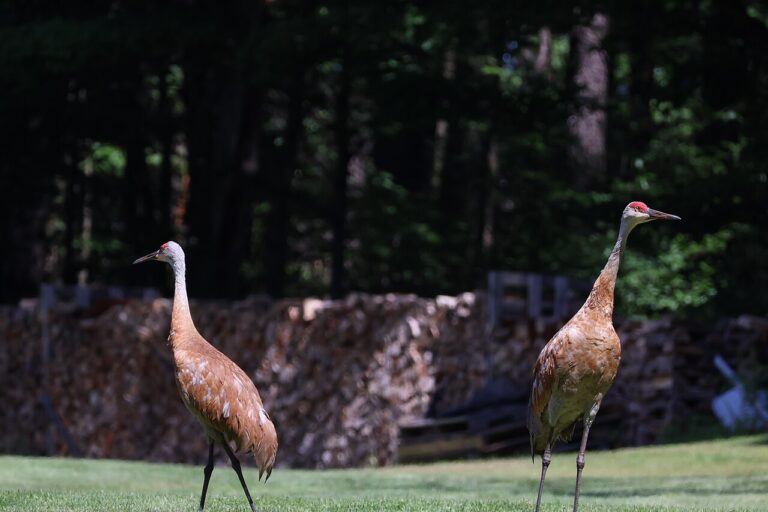 Sandhill Crane Migration on the Platte River