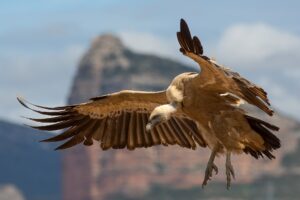
The bearded vulture is a huge, spectacular vulture of high mountains, famous for its diet of bones. Its long, narrow wings and diamond-shaped tail make it look more like a giant falcon than a typical vulture.
Interesting facts
- Bones can make up about 70–90 percent of its diet.
- Its stomach acid is strong enough to dissolve bone within about a day.
- Its rusty-orange colour comes from bathing in iron-rich mud and dust.
- It is also called the lammergeier.
- Bearded vultures have been reintroduced to the Alps since 1986.
- It has a striking red ring around each eye and a black ‘beard’ of bristles.
Behaviour
Bearded vultures patrol mountain slopes alone or in pairs, gliding low along ridges. They use favourite rocks, called ossuaries, to break bones.
Breeding and young
Pairs build large nests in caves or on cliff ledges and lay one or two eggs in winter. Usually only one chick survives.
Threats and conservation
Poisoning, illegal shooting, collisions with power lines and lead poisoning.
Where to see it
- Pyrenees, especially feeding stations in Aragon, Spain
- Swiss National Park and the Engadin, Switzerland
- Upper Mustang and the Annapurna region, Nepal
- Simien Mountains, Ethiopia, and Giant’s Castle, Drakensberg
Status source: IUCN Red List. Profile last reviewed September 2026.
Where to see the bearded vulture
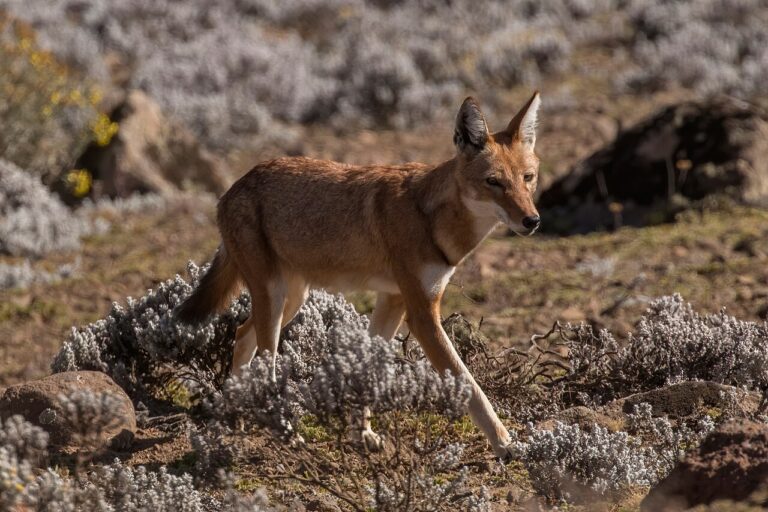 Simien and Bale Mountains: Geladas and Ethiopian WolvesEthiopia's high plateaus are home to the world's rarest canid and a grass-eating monkey found nowhere else. How…
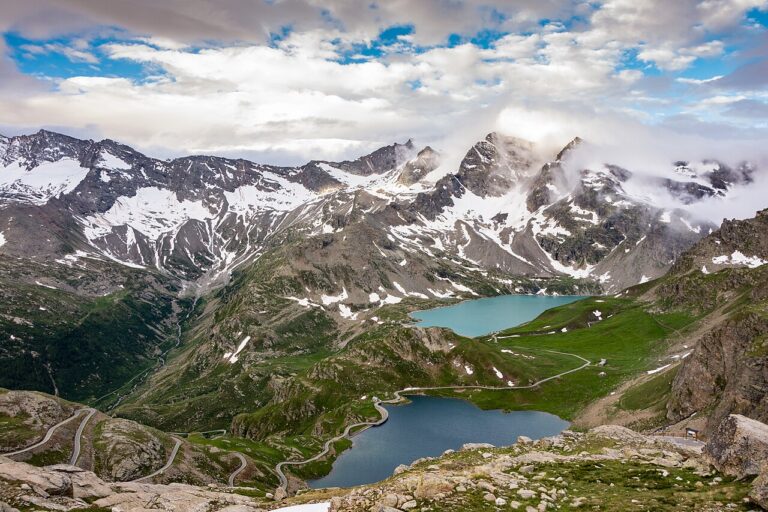 Gran Paradiso: Alpine Ibex and MarmotsItaly's oldest national park saved the Alpine ibex from extinction. It is still one of the best places…