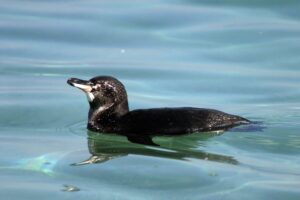
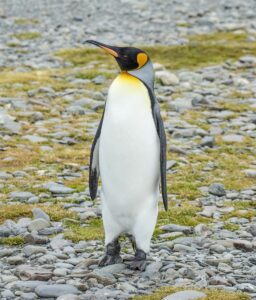
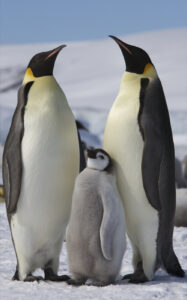
The African penguin is a small, black-and-white penguin that lives on the coasts of South Africa and Namibia. Once numbering in the millions, it has declined dramatically and is now one of the most threatened seabirds in the world.
Interesting facts
- Its donkey-like braying call earned it the old name ‘jackass penguin’.
- Pink glands above its eyes help it lose heat in hot weather.
- Each bird has a unique pattern of black spots on its chest.
- In the 1800s and 1900s, guano harvesting removed the deep layers penguins used for burrows.
- Conservationists provide artificial nest boxes to protect eggs and chicks from heat and predators.
- It is the only penguin that breeds in Africa.
Behaviour
African penguins live in colonies and feed on shoals of small fish close to shore. They nest in burrows, under bushes or in nest boxes to escape the sun.
Breeding and young
Pairs usually mate for life and return to the same colony. They lay two eggs, incubated by both parents for about 40 days. Chicks fledge after two to four months.
Threats and conservation
Shortage of food due to overfishing and shifts in sardine and anchovy stocks, oil spills, habitat loss, disturbance from ships, and extreme weather. Recent protections include closing fishing near key colonies.
Where to see it
- Boulders Beach, Simon’s Town, near Cape Town
- Stony Point, Betty’s Bay, South Africa
- Robben Island, South Africa
- Halifax Island, near Lüderitz, Namibia
Status source: IUCN Red List. Profile last reviewed September 2026.
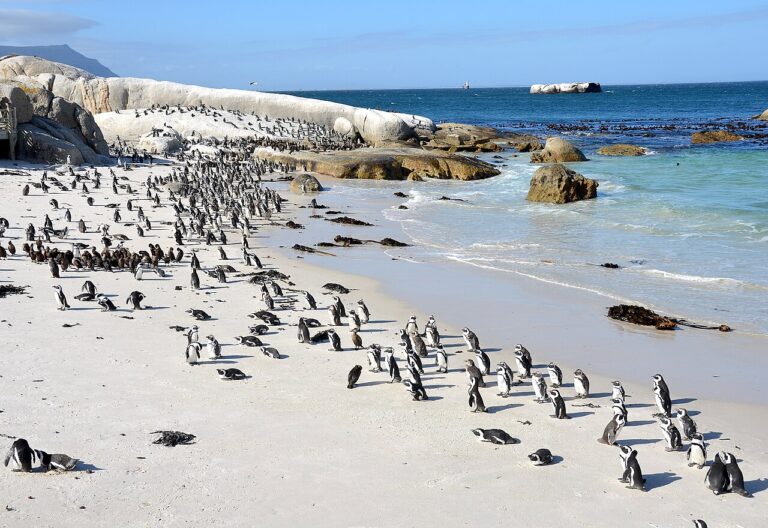 Cape Town Wildlife: Penguins, Whales and Great White Sharks