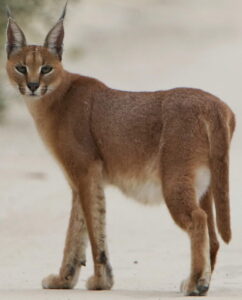
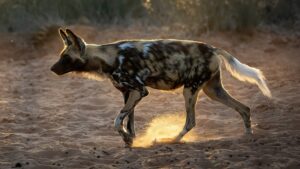
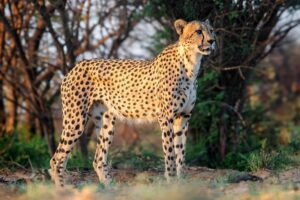
The serval is a slender, long-legged, spotted cat of African grasslands and wetlands. It relies on hearing more than sight, listening for prey in tall grass before launching its famous high pounce. It is one of the most frequently seen small cats on safari.
Interesting facts
- Servals have the longest legs relative to body size of any cat.
- Their huge ears can pick up rodents moving underground.
- They catch prey with a high, arching pounce, landing with their front paws.
- Servals can leap more than 2 metres into the air to snatch birds.
- Each serval has a unique pattern of spots and stripes.
- They often hunt in tall grass and wetlands, where their height helps them see and hear.
Behaviour
Servals are solitary and active at dawn, dusk and night, although they are often seen by day in protected areas. They patrol wetlands and grasslands, pausing to listen, then leap. They can eat several thousand rodents a year, making them valuable pest controllers for farmers.
Breeding and young
After about 74 days, females give birth to one to four kittens in dense cover. Kittens are independent at about a year old.
Threats and conservation
Loss and degradation of wetlands and grasslands, persecution by poultry farmers, road deaths and trade in skins and live animals for the exotic pet market.
Where to see it
- Ngorongoro Crater, Tanzania: one of the best places to see servals
- Serengeti National Park, Tanzania
- Maasai Mara, Kenya
- Central Kalahari and Okavango, Botswana (occasional)
Status source: IUCN Red List. Profile last reviewed September 2026.