The giant panda is a bear that has specialised almost entirely in eating bamboo. It is a national treasure of China and a global symbol of conservation. Decades of habitat protection have allowed numbers to increase, although its forests remain fragmented.
Interesting facts
- Pandas spend up to 14 hours a day eating and can eat 12–38 kg of bamboo daily.
- Although they eat plants, pandas have the digestive system of a carnivore and digest bamboo poorly.
- A newborn panda is about 1/900th of its mother’s weight, one of the smallest newborns relative to the mother of any mammal.
- Pandas communicate by scent marks and bleating calls.
- China’s fourth national survey counted 1,864 wild giant pandas.
- The giant panda was downlisted from Endangered to Vulnerable in 2016.
Behaviour
Pandas are solitary and move little, because bamboo provides little energy. They do not hibernate, instead moving to lower elevations in winter.
Breeding and young
Females are fertile for only two or three days a year. They usually give birth to one or two cubs but typically raise only one. Cubs are born pink, blind and nearly hairless and stay with their mother for about 18 months to two years.
Threats and conservation
Habitat fragmentation from roads and development, bamboo die-offs, and climate change, which may reduce suitable bamboo habitat.
Where to see it
- Foping National Nature Reserve, Shaanxi, China
- Wolong and other reserves in Sichuan, China
- Chengdu Research Base of Giant Panda Breeding (captive)
Status source: IUCN Red List. Profile last reviewed September 2026.
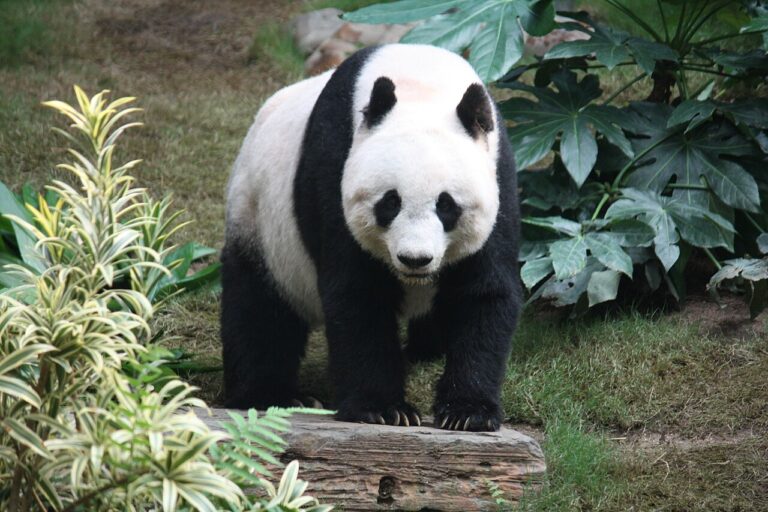 Where to See Giant Pandas in China (Wild and Captive)