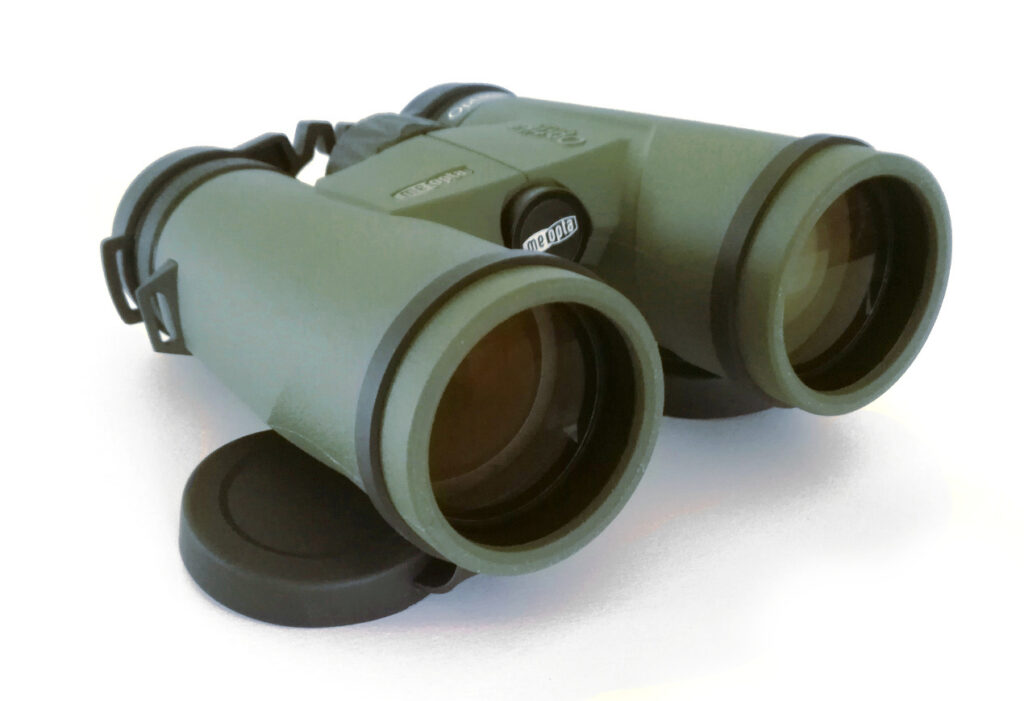
On safari or on a birding trip, a good pair of binoculars is the most important piece of kit after your eyes. They reveal a leopard in a distant tree, the colours of a bee-eater or a whale’s blow on the horizon. This guide explains what the numbers mean, which size suits you and what to look for.
What the numbers mean
Binoculars are described by two numbers, such as 8×42:
- 8x is the magnification: objects appear eight times closer.
- 42 is the objective lens diameter in millimetres: larger lenses gather more light, giving brighter images in low light.
Which size is best?
| Type | Examples | Best for | Trade-offs |
|---|---|---|---|
| 8×42 | The classic all-rounder | Safari, birding, forests | Wide field of view, steady, bright; slightly less reach |
| 10×42 | More magnification | Open plains, raptors, seabirds, distant animals | Narrower field, more shake |
| 8×32 / 10×32 | Mid-size | Travel, hiking | Lighter; slightly less bright |
| 8×25 / 10×25 | Compact | Backup, children, very light travel | Dimmer, narrower view |
| Image-stabilised (e.g. 10×30, 12×36) | Electronic stabilisation | Boats, vehicles, people with shaky hands | Heavier, need batteries, costly |
For most safari-goers and birders, 8×42 or 10×42 is ideal. Choose 8x for forests and general use, 10x for open country and distant animals.
Features to look for
- Waterproof and fog-proof (nitrogen or argon filled).
- Fully multi-coated lenses for brightness and contrast.
- Phase-corrected roof prisms for sharpness.
- ED (extra-low dispersion) glass reduces colour fringing, useful for birding.
- Close focus under 2 metres for butterflies and nearby birds.
- Comfortable eyecups, especially if you wear glasses (look for long eye relief).
- Weight: 42 mm models usually weigh 600 to 850 g; try before you buy.
Price levels
- Entry level: good-value binoculars can be excellent for beginners.
- Mid-range: noticeable improvement in brightness, sharpness and durability; the sweet spot for most travellers.
- Premium: the best optics from leading European and Japanese makers, lasting decades.
The best binoculars are the ones you will carry. On a shared safari, bring a pair for each person: waiting to borrow binoculars means missing sightings.
Care tips
- Use the lens caps and a harness strap to keep them clean and handy.
- Clean lenses with a blower brush and lens cloth, not your shirt.
- Keep them in a dust-proof bag on game drives.
Frequently asked questions
Are 8×42 or 10×42 binoculars better for safari? Both work well. 8×42 gives a wider, steadier view; 10×42 gives more reach on open plains.
Do I need expensive binoculars? No, but mid-range models are noticeably better in low light, which matters at dawn and dusk.
Are binoculars provided on safari? Some lodges provide them, but quality varies. Bringing your own is best.
Are image-stabilised binoculars worth it? For boats and moving vehicles, or if your hands shake, they can be excellent.
Related guides
- Safari packing list
- Wildlife photography for beginners
- Birdwatching in Nepal
- Animal profiles: Lilac-breasted roller, Common kingfisher, Leopard
Cover photo: Andreas Klehr, CC BY-SA 4.0, via Wikimedia Commons