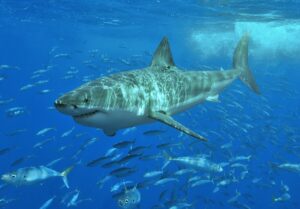
The tiger shark is a large, powerful predator of warm seas, named for the stripes on its young. It is one of the least fussy eaters in the ocean and plays an important role as a top predator in coastal ecosystems.
Interesting facts
- Young tiger sharks have dark stripes like a tiger, which fade as they grow.
- Their serrated teeth can cut through turtle shells.
- Tiger sharks give birth to live young, with litters of 10 to 80 pups.
- They are responsible for the second-highest number of recorded bites on people, after great white sharks.
- Tracking has shown some tiger sharks migrate thousands of kilometres.
- They help keep seagrass healthy by making turtles and dugongs move around rather than overgraze.
Behaviour
Tiger sharks are mostly solitary and often hunt at night, moving into shallow water to feed. They are curious and investigate objects by biting them.
Breeding and young
Tiger sharks are ovoviviparous: eggs hatch inside the mother, and she gives birth to live pups after a gestation of about 15–16 months.
Threats and conservation
Overfishing for fins, meat and liver oil, accidental capture and shark control programmes.
Where to see it
- Tiger Beach, Bahamas
- Fuvahmulah, Maldives
- Aliwal Shoal, South Africa
- Beqa Lagoon, Fiji
Status source: IUCN Red List. Profile last reviewed September 2026.