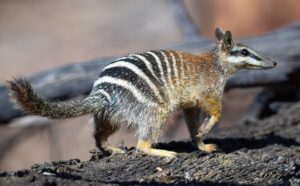
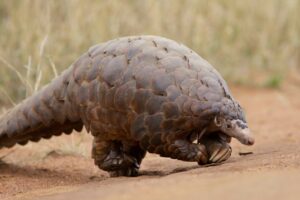
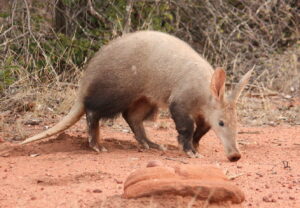
Termites are social insects that live in large colonies and feed on plant material. They are among the most important decomposers on Earth, recycling nutrients and shaping soils.
Interesting facts
- Termites are closely related to cockroaches.
- African termite mounds can be several metres tall.
- A field of termite mounds in Brazil covers an area the size of Great Britain, and some mounds are about 4,000 years old.
- Queens of some species lay thousands of eggs a day.
- Some termites farm fungus inside their mounds.
- Magnetic termites in northern Australia build flat mounds aligned north to south.
Behaviour
Termite colonies have castes: workers build and feed, soldiers defend, and kings and queens breed. They communicate mainly by chemical signals.
Breeding and young
Winged kings and queens leave the nest in swarms, shed their wings and start new colonies together.
Threats and conservation
Termites are abundant. Some species are pests of wooden buildings.
Where to see it
- Litchfield National Park, Australia, for magnetic termite mounds
- Kruger National Park and other African savannas
- Okavango Delta, where many islands began as termite mounds
- Caatinga of northeastern Brazil
Status source: IUCN Red List. Profile last reviewed September 2026.