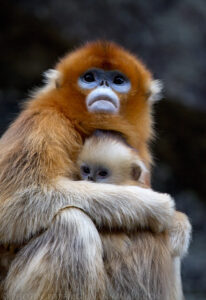
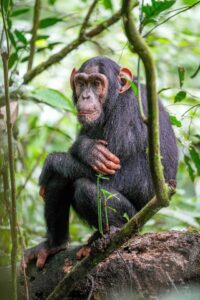
The Japanese macaque, or snow monkey, is a medium-sized monkey found only in Japan. It is famous for surviving harsh winters in the mountains and for learned behaviours that have made it a key species in the study of animal culture.
Interesting facts
- Japanese macaques live further north than any other non-human primate.
- Their thick fur keeps them warm at temperatures below −15 °C.
- On Koshima Island in 1953, a young female began washing sweet potatoes in water, a habit that spread through her group.
- Some groups have been seen making and playing with snowballs.
- They have red faces and red bottoms that become brighter in the breeding season.
- Groups have distinct traditions, a form of animal culture.
Behaviour
Japanese macaques live in troops of 20 to over 100 animals with a clear social hierarchy passed down through the female line. Females stay in their birth troop, while males move between troops.
Breeding and young
Mating takes place in autumn and winter, and a single infant is born in spring or summer after about six months. Mothers and other females care for infants.
Threats and conservation
The species is common, but conflict with farmers leads to culling in some areas. Habitat loss and road building affect local populations.
Where to see it
- Jigokudani Monkey Park, Nagano, Japan
- Yakushima Island, Kagoshima, Japan
- Arashiyama Monkey Park, Kyoto, Japan
- Shimokita Peninsula, Aomori, Japan
Status source: IUCN Red List. Profile last reviewed September 2026.
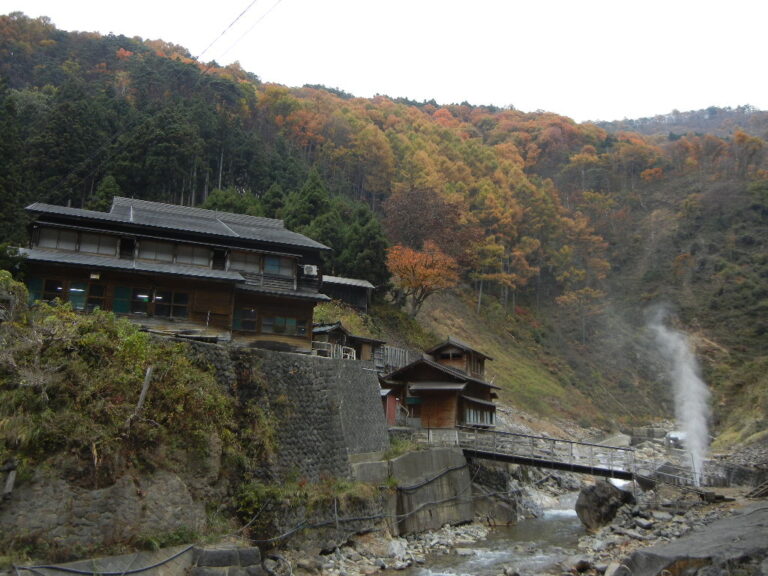 Snow Monkeys of Jigokudani and Winter Wildlife in Hokkaido