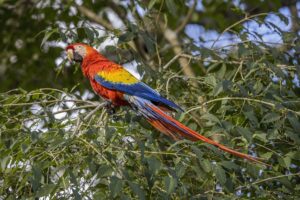
The hyacinth macaw is a spectacular, cobalt-blue parrot of central South America. It depends on a few palm species for food and a few tree species for nesting, and has become a flagship for conservation in the Pantanal.
Interesting facts
- Its bright cobalt-blue plumage is set off by yellow skin around the eyes and at the base of the beak.
- In the Pantanal, most hyacinth macaws nest in hollows of the manduvi tree.
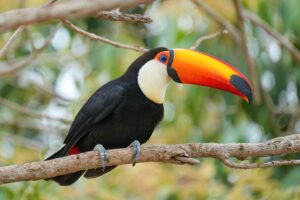
- Toco toucans spread manduvi seeds but also eat macaw eggs, so macaws both depend on and suffer from toucans.
- Nest boxes and conservation work have helped the Pantanal population recover.
- Hyacinth macaws are loud and sociable, gathering in noisy flocks.
- They often eat palm nuts that have passed through cattle, which removes the fleshy outer layer.
Behaviour
Hyacinth macaws live in pairs, families and larger flocks. They feed on palm nuts on the ground or in trees and roost communally. Pairs stay together for life.
Breeding and young
Females lay one or two eggs in a tree cavity or nest box. Incubation takes about 28 days, and usually only one chick survives. Chicks fledge at about three months and stay with their parents for over a year.
Threats and conservation
Illegal capture for the pet trade, loss of habitat and nesting trees to farming and fire, and slow reproduction.
Where to see it
- Pantanal, Brazil, especially along the Transpantaneira and at lodges in Mato Grosso do Sul
- Chapada dos Guimarães, Mato Grosso, Brazil
- Eastern Bolivia
- Accredited zoos with breeding programmes
Status source: IUCN Red List. Profile last reviewed September 2026.