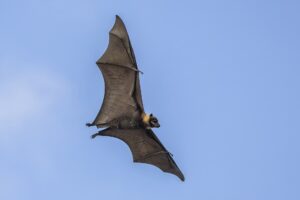
The common vampire bat is one of only three bat species that feed entirely on blood. Despite its fearsome reputation, it is small, social and cooperative, and its saliva has inspired medical research.
Interesting facts
- Vampire bats can starve after two to three nights without a meal.
- Heat-sensing pits on their nose help them find blood vessels close to the skin.
- Their saliva contains an anticoagulant that has been studied for stroke treatment.
- Unusually for bats, they can walk, run and jump on the ground.
- A vampire bat drinks about half its body weight in blood each night.
- They can spread rabies to livestock, which is a major concern for farmers.
Behaviour
Vampire bats roost in colonies in caves, hollow trees and buildings. At night, they fly low to find sleeping animals, land nearby and approach on foot. They make a small cut with razor-sharp teeth and lap up the blood.
Breeding and young
Females give birth to a single pup after about seven months. Mothers nurse pups for up to nine months, and other females may help care for them.
Threats and conservation
The species is common and has benefited from cattle ranching. It is culled to reduce rabies in livestock, which can also kill other bat species.
Where to see it
- Night tours in Costa Rica and Belize
- Caves in Trinidad and the Amazon
- Mostly seen by researchers; they are rarely noticed by visitors
- Some zoos keep colonies
Status source: IUCN Red List. Profile last reviewed September 2026.