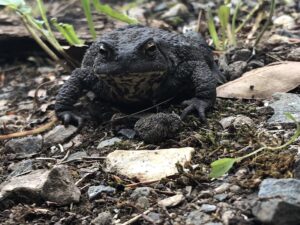
The cane toad is a large, warty toad native to the Americas. In Australia, it is one of the most notorious invasive species, poisoning native predators as it spreads.
Interesting facts
- Glands behind the eyes produce a toxin that can kill animals that bite or eat the toad.
- In Australia, cane toads have caused steep declines in quolls, goannas and some snakes.
- A female can lay tens of thousands of eggs in a single clutch.
- The toads failed to control the cane beetles they were introduced to eat.
- In 2023, rangers in Queensland found a giant cane toad weighing about 2.7 kg, nicknamed ‘Toadzilla’.
- Scientists are training predators to avoid toads by feeding them toad-flavoured baits that make them sick.
Behaviour
Cane toads are nocturnal and eat almost anything. They are tolerant of dry conditions and spread rapidly, often along roads.
Breeding and young
Females lay long strings of eggs in ponds and ditches. Tadpoles develop quickly and are also toxic.
Threats and conservation
The species is abundant and is controlled where invasive.
Where to see it
- Queensland, Australia (invasive)
- Kakadu National Park, Northern Territory (invasive)
- Costa Rica and Panama (native)
- Amazon lodges in Peru and Brazil (native)
Status source: IUCN Red List. Profile last reviewed September 2026.