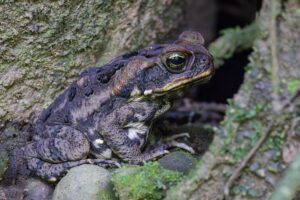
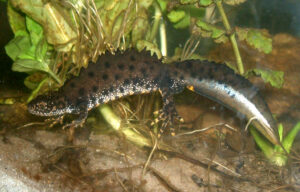
The common toad is a warty, brown amphibian found across Europe. It spends most of its life on land and gathers at breeding ponds each spring.
Interesting facts
- Toads walk rather than hop.
- Warty skin and glands behind the eyes produce toxins that deter predators.
- Toads lay eggs in long strings, while frogs lay them in clumps.
- Common toad numbers in Britain have fallen by about two-thirds in 30 years.
- Males cling tightly to females for days during the breeding season.
- Toads hibernate on land under logs, stones or leaf litter.
Behaviour
Common toads are nocturnal and spend the day hidden. They migrate to breeding ponds in early spring, often in large numbers on mild, wet nights.
Breeding and young
Females lay strings of several thousand eggs wrapped around water plants. Tadpoles turn into tiny toadlets in summer.
Threats and conservation
Road deaths during migration, loss of breeding ponds, pollution and disease.
Where to see it
- Garden ponds and woodland across Europe
- Toad crossings in Britain on mild spring nights (join a local patrol)
- Lakes and ponds in March and April
- Under logs and stones in damp gardens
Status source: IUCN Red List. Profile last reviewed September 2026.