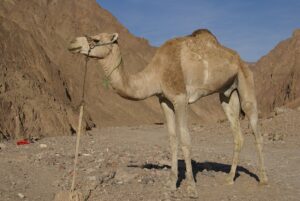
The Bactrian camel is a two-humped camel of the cold deserts of Central Asia. Domesticated thousands of years ago, it was the backbone of Silk Road trade. A separate wild species still survives in the Gobi, but is critically endangered.
Interesting facts
- Bactrian camels have two humps, which store fat.
- Wild Bactrian camels can drink salty water that other mammals cannot.
- They grow a thick shaggy coat in winter and shed it in clumps in spring.
- Bactrian camels carried goods along the ancient Silk Road.
- The Thousand Camel Festival in Mongolia celebrates them each March.
- Double-humped camels also live in Ladakh’s Nubra Valley, descendants of Silk Road caravans.
Behaviour
Camels live in herds and can travel long distances to find food and water. They can go without drinking for long periods, then drink large amounts quickly.
Breeding and young
After about 13 months, a single calf is born. Calves stay with their mothers for several years.
Threats and conservation
Domestic camels are common. Wild Bactrian camels face hunting, mining, competition with livestock and interbreeding with domestic camels.
Where to see it
- Gobi Desert, Mongolia
- Thousand Camel Festival, Bulgan, Mongolia, in March
- Nubra Valley, Ladakh, India
- Xinjiang, China, and Kazakhstan
Status source: IUCN Red List. Profile last reviewed September 2026.
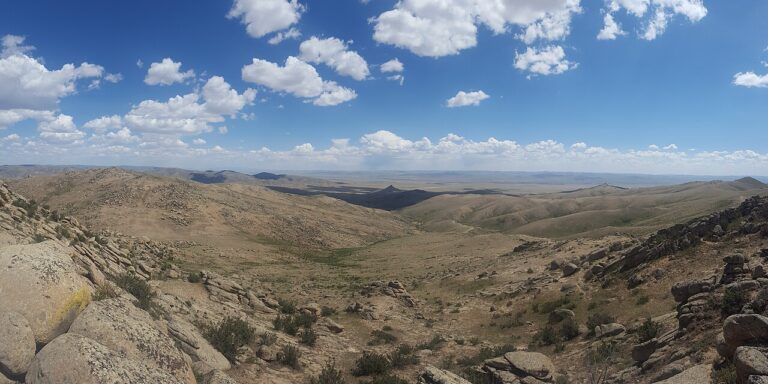 Mongolia Wildlife: Przewalski’s Horses, Snow Leopards and Steppe Eagles