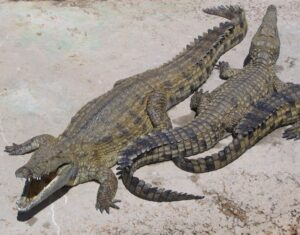
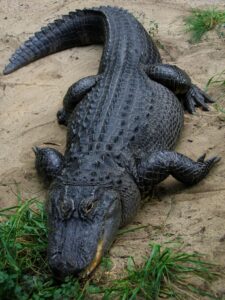
The black caiman is a large, dark crocodilian of the Amazon basin. After being hunted almost to extinction for its skin, it has made a strong recovery in protected areas.
Interesting facts
- Its dark scales provide camouflage when hunting at night.
- Hunting for skins in the mid-20th century wiped out most black caimans in parts of their range.
- Since protection, populations have recovered strongly, especially in reserves such as Mamirauá.
- Females guard their nests and young from predators.
- Its eyes shine red when caught in a torch beam at night.
- It is an apex predator that helps keep river ecosystems healthy.
Behaviour
Black caimans are mostly nocturnal hunters, waiting in shallow water for prey. In the dry season they gather in lakes and river channels.
Breeding and young
Females build mound nests of vegetation and lay about 30–60 eggs. They guard the nest for about six weeks until the young hatch.
Threats and conservation
Illegal hunting for meat and skins, habitat loss, dams and conflict with fishers.
Where to see it
- Mamirauá Sustainable Development Reserve, Brazil
- Lake Sandoval, Tambopata, Peru
- Pacaya-Samiria National Reserve, Peru
- Rupununi rivers, Guyana
Status source: IUCN Red List. Profile last reviewed September 2026.
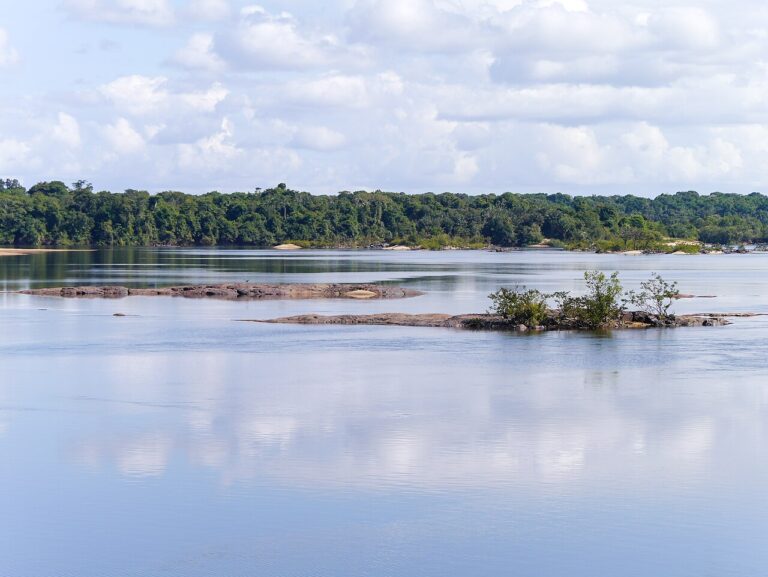 Rupununi and Iwokrama: Guyana’s Wild Interior