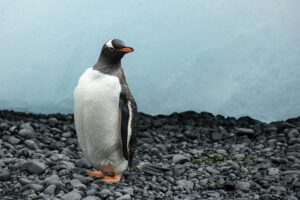
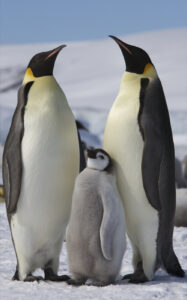
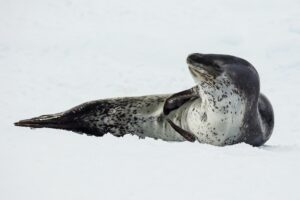
The Adélie penguin is a classic black-and-white penguin found all around Antarctica. It depends on sea ice and is an important indicator of how Antarctic ecosystems are responding to climate change.
Interesting facts
- Adélie penguins build nests of small stones, and they often steal stones from their neighbours.
- The species was named after Adèle, the wife of French explorer Jules Dumont d’Urville.
- They can dive to about 175 metres.
- Adélie numbers have fallen sharply on the warming Antarctic Peninsula but grown in parts of East Antarctica.
- Some travel thousands of kilometres each year following the sea ice.
- They have a distinctive white ring around each eye.
Behaviour
Adélie penguins spend the winter at sea near the edge of the pack ice and return to their colonies in spring. They are bold, busy and often comical on land.
Breeding and young
Pairs lay two eggs in a stone nest and take turns incubating them for about five weeks. Chicks gather in crèches and fledge at about eight weeks.
Threats and conservation
Climate change and loss of sea ice, changes in krill populations, and fishing for krill.
Where to see it
- Paulet Island and Brown Bluff, Antarctic Peninsula
- Cape Adare and Cape Royds, Ross Sea
- Antarctic expedition cruises
- Some large aquariums
Status source: IUCN Red List. Profile last reviewed September 2026.
Where to see the adélie penguin
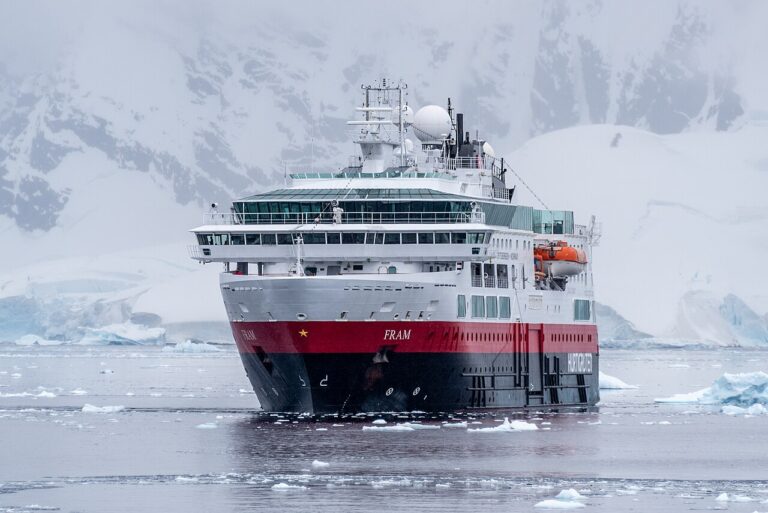 Choosing an Antarctica Expedition ShipThe ship you choose shapes your whole Antarctic experience. What to look for, from size and landings to…
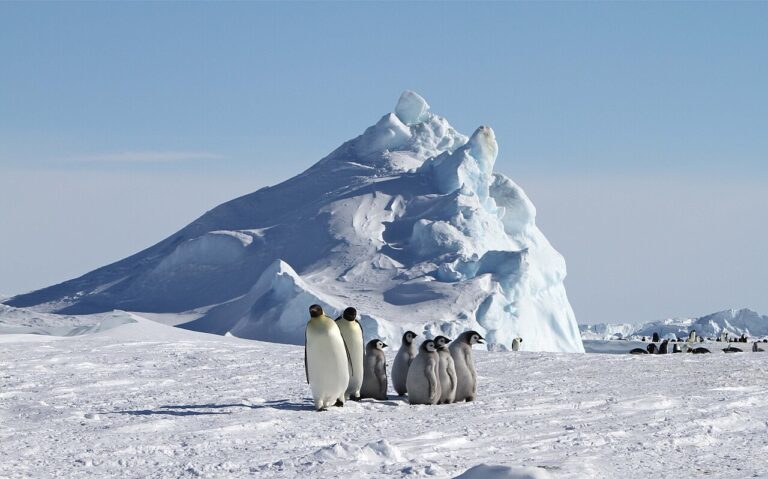 Emperor Penguin Expeditions: Snow Hill IslandEmperor penguins breed on the sea ice in winter, far from most tourist routes. How specialised expeditions reach…