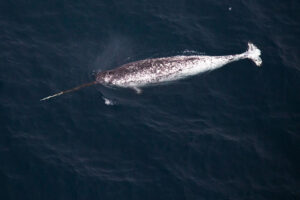
The bowhead whale is a huge, dark whale of the Arctic, perfectly adapted to icy seas. It spends its whole life in cold waters and is the longest-lived mammal on Earth.
Interesting facts
- Harpoon tips from the 1800s have been found embedded in living bowheads.
- It has the thickest blubber of any animal, up to about 50 cm.
- Its mouth is about a third of its body length, with baleen plates up to about 4 metres long.
- Bowheads can break through sea ice with their massive heads.
- They sing complex, ever-changing songs, sometimes compared to jazz.
- Iñupiat and other Arctic peoples hunt bowheads for subsistence under international quotas.
Behaviour
Bowheads migrate with the edges of the sea ice, feeding by skimming through swarms of tiny crustaceans. They are usually seen alone or in small groups.
Breeding and young
After a gestation of about 13–14 months, a single calf is born every three to four years.
Threats and conservation
Past commercial whaling drastically reduced populations. Today’s concerns include climate change, shipping, oil and gas development, noise and entanglement.
Where to see it
- Isabella Bay (Niginganiq), Baffin Island, Canada
- Utqiaġvik (Barrow), Alaska, during migration
- Sea of Okhotsk, Russia
- Arctic expedition cruises (rare)
Status source: IUCN Red List. Profile last reviewed September 2026.
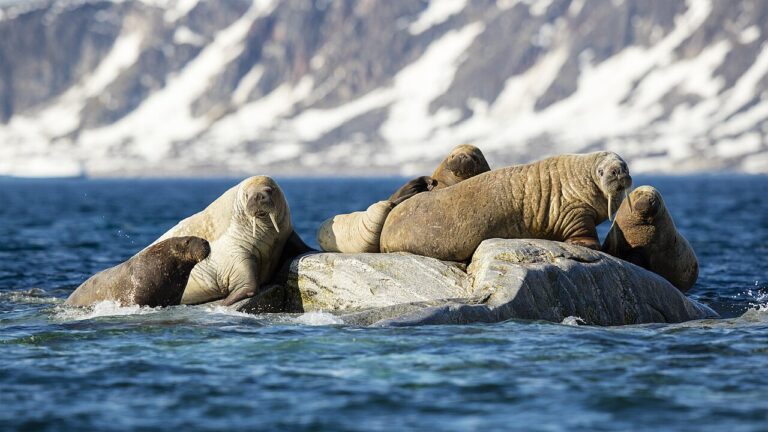 Svalbard Polar Bear Expeditions
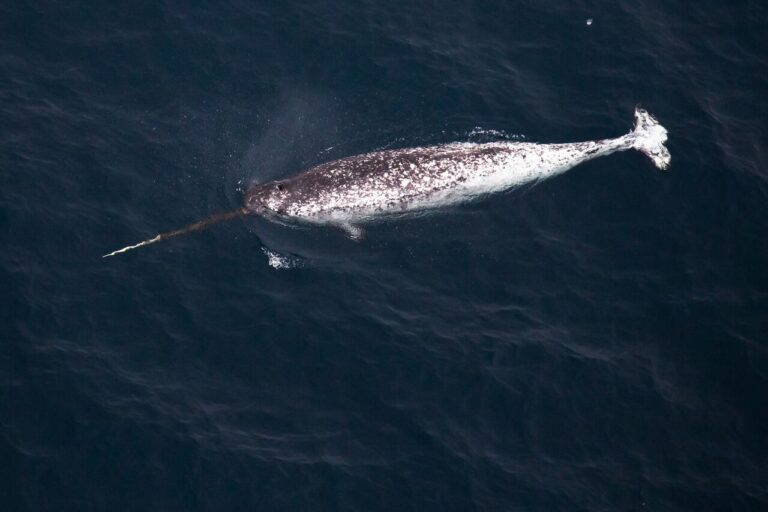 Narwhal and Polar Bear Expeditions in Arctic Canada