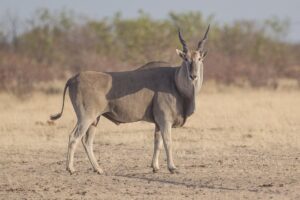
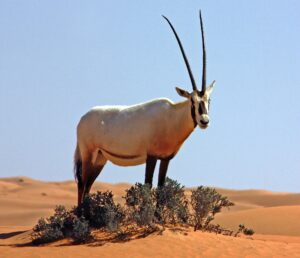
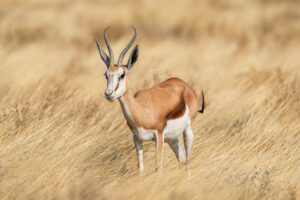
The gemsbok is a large, strikingly marked oryx of southern Africa’s deserts. It is one of the best-adapted large mammals for survival in hot, dry environments.
Interesting facts
- Its long, straight horns can kill a lion.
- The gemsbok appears on Namibia’s coat of arms.
- It can go for weeks without drinking, getting moisture from melons, roots and dew.
- Both males and females have horns; females’ are often longer and thinner.
- Gemsbok were introduced to New Mexico, USA, in the 1970s, where thousands now roam.
- Its striking black-and-white face markings may help reflect heat.
Behaviour
Gemsbok live in herds of about 10 to 40, led by a dominant bull. They are active in the cooler parts of the day and rest in the shade when it is hot.
Breeding and young
After about nine months, a single calf is born, hidden for several weeks before it joins the herd.
Threats and conservation
Gemsbok are common and secure, although fences block their movements to water and grazing.
Where to see it
- Namib-Naukluft National Park and Sossusvlei, Namibia
- Etosha National Park, Namibia
- Kgalagadi Transfrontier Park, South Africa and Botswana
- Central Kalahari Game Reserve, Botswana
Status source: IUCN Red List. Profile last reviewed September 2026.
Where to see the gemsbok
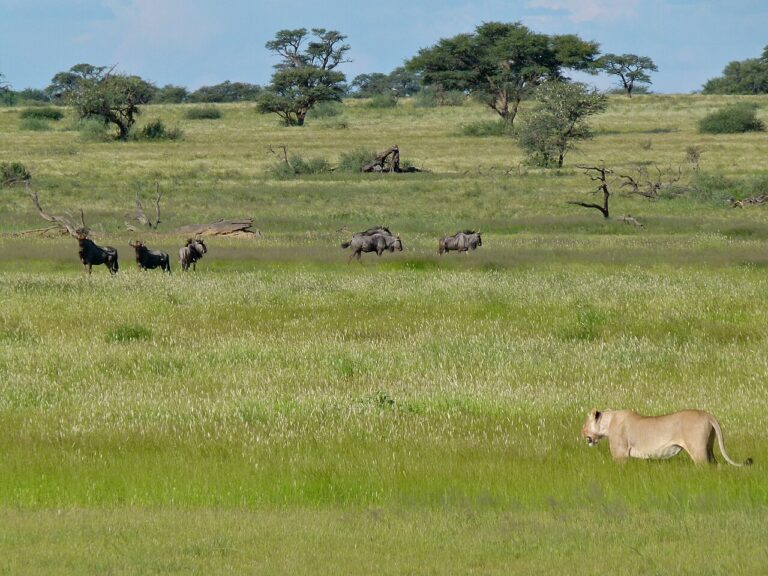 Kgalagadi Transfrontier Park: Black-maned Lions of the KalahariRed dunes, dry riverbeds and some of Africa's most photogenic predators. How to plan a self-drive trip to…
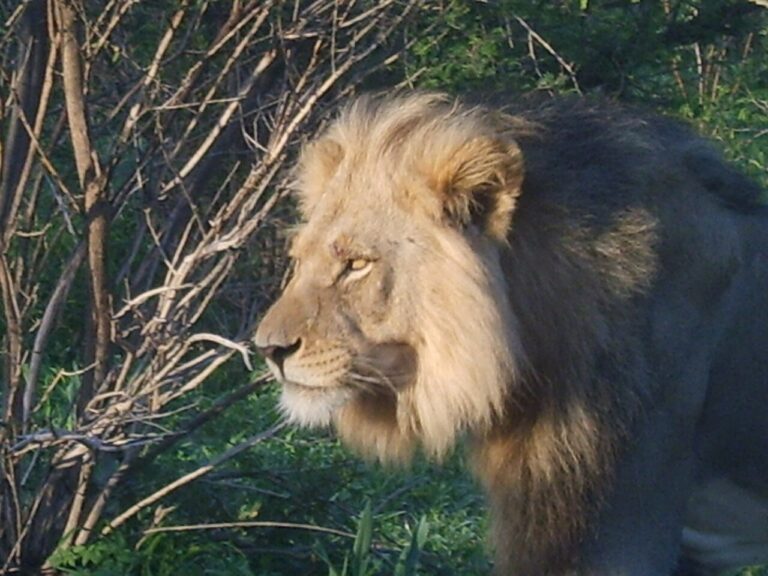 Central Kalahari Game Reserve: Desert Lions and the Green SeasonOne of the largest reserves on Earth, the Central Kalahari comes alive in the rains, when antelope gather…
 Namibia Self-Drive Wildlife Itinerary: 14 DaysA two-week road trip through Namibia's deserts, coast and Etosha, designed for wildlife. Day-by-day route, driving tips and…