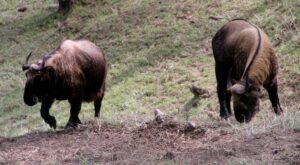
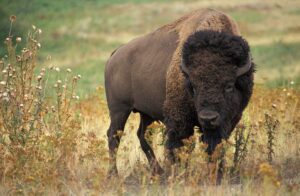
The wild yak is a massive, shaggy wild ox of the Tibetan Plateau and the ancestor of the domestic yak. It is superbly adapted to cold, thin air and harsh winds at extreme altitudes.
Interesting facts
- Wild yaks are much larger than domestic yaks, which descend from them.
- Their long, shaggy coat and dense undercoat keep them warm.
- They have large lungs and hearts to cope with thin air.
- Wild yaks can cross snowfields and swim icy rivers.
- About 10,000 are thought to remain in the wild.
- Males often live alone or in small bachelor groups, while females form larger herds.
Behaviour
Females and young form herds that can number in the hundreds, while bulls live alone or in small groups for most of the year. Yaks move seasonally to find fresh grazing.
Breeding and young
Mating takes place in late summer and autumn. After about nine months, a single calf is born, often in spring or early summer.
Threats and conservation
Hunting, competition and interbreeding with domestic yaks, and disease spread from livestock.
Where to see it
- Chang Tang (Qiangtang) Nature Reserve, Tibet
- Hoh Xil (Kekexili), Qinghai, China
- Arjin Shan Nature Reserve, Xinjiang, China
- Chang Chenmo Valley, Ladakh (very rare)
Status source: IUCN Red List. Profile last reviewed September 2026.