Fireflies are soft-bodied beetles that produce light to communicate. Their summer displays are one of nature’s most magical sights, and they are increasingly valued as indicators of healthy, dark and unpolluted habitats.
Interesting facts
- Fireflies are beetles, not flies.
- Their light is made by a chemical reaction and wastes almost no energy as heat.
- Each species has its own pattern of flashes, used to find mates.
- Some ‘femme fatale’ fireflies mimic the flashes of other species to lure and eat their males.
- Firefly larvae also glow and are sometimes called glow-worms.
- Light pollution, pesticides and habitat loss are causing declines in many regions.
Behaviour
Adult fireflies flash at dusk and during the night to attract mates. Males usually fly and flash, while females answer from vegetation. In parts of Southeast Asia, thousands gather in mangrove trees and flash together.
Breeding and young
Females lay eggs in moist soil or leaf litter. The larvae live for a year or more, hunting snails and slugs, before turning into adults.
Threats and conservation
Light pollution, habitat loss, pesticides and drainage of wetlands.
Where to see it
- Elkmont, Great Smoky Mountains National Park, USA, in late May and June
- Congaree National Park, South Carolina, USA
- Kampung Kuantan, Kuala Selangor, Malaysia
- Nanacamilpa firefly sanctuary, Tlaxcala, Mexico, in June and July
Status source: IUCN Red List. Profile last reviewed September 2026.
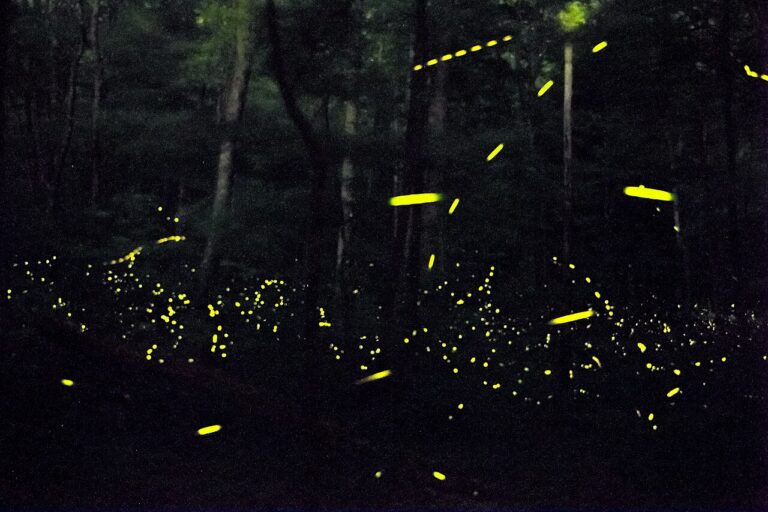 Great Smoky Mountains Synchronous Fireflies