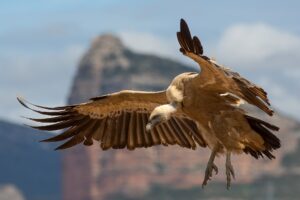
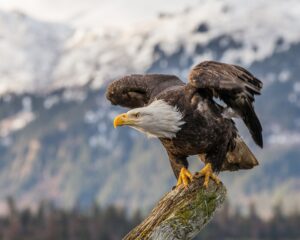
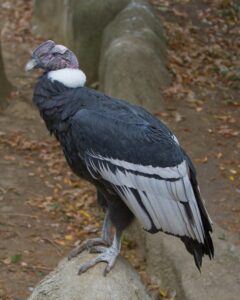
The California condor is a massive vulture and one of the rarest birds in the world. It came within a whisker of extinction and has been brought back through decades of captive breeding and release.
Interesting facts
- It has the largest wingspan of any land bird in North America.
- Condors can soar for hours without flapping, covering over 200 km in a day.
- Lead poisoning from bullet fragments in carcasses is the main threat.
- In 2021, scientists reported that two condor chicks hatched from unfertilised eggs, the first known case of this in the species.
- Its bald head helps it stay clean when feeding inside carcasses.
- Each wild condor is tagged and closely monitored.
Behaviour
Condors soar on thermals and updrafts to search for carcasses, often following other scavengers. They are social and feed in groups, with a clear pecking order.
Breeding and young
Pairs mate for life and lay a single egg in a cave or cliff crevice, usually every other year. Chicks fledge at about six months and depend on their parents for a year or more.
Threats and conservation
Lead poisoning, eating trash such as bottle caps, collisions with power lines, and the loss of genetic diversity. Lead-free ammunition programmes are vital.
Where to see it
- Grand Canyon National Park and Vermilion Cliffs, Arizona
- Pinnacles National Park, California
- Big Sur coast, California
- Zion National Park, Utah (occasional)
Status source: IUCN Red List. Profile last reviewed September 2026.