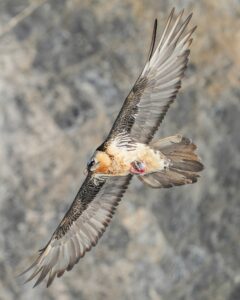
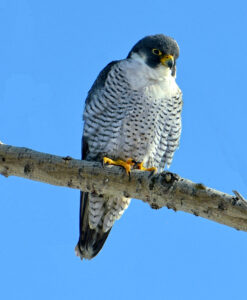
The golden eagle is one of the largest and most widespread eagles in the world. A powerful hunter of open, mountainous country, it has been admired and used in falconry across the Northern Hemisphere for thousands of years.
Interesting facts
- The golden eagle is the national bird of Mexico, Germany, Albania and Kazakhstan.
- Its name comes from the golden-brown feathers on the back of its head and neck.
- Pairs may use the same nests for decades, adding material each year until they are huge.
- Territories can cover up to about 200 km².
- In a nest with two chicks, the older one often kills the younger.
- Golden eagles have eyesight several times sharper than humans.
Behaviour
Golden eagles are usually seen alone or in pairs, soaring on long, broad wings. They hunt by soaring and scanning the ground, or by flying low along slopes to surprise prey. Pairs perform spectacular undulating display flights.
Breeding and young
Golden eagles usually lay two eggs on a cliff ledge or in a large tree. Incubation takes about 41–45 days, and chicks fledge after about 10–11 weeks.
Threats and conservation
Illegal persecution, poisoning, collisions with wind turbines and power lines, lead poisoning from bullet fragments, and habitat change.
Where to see it
- Scottish Highlands and islands
- Swiss and Austrian Alps
- Rocky Mountains, USA and Canada
- Altai Mountains, Mongolia, at the Golden Eagle Festival
Status source: IUCN Red List. Profile last reviewed September 2026.
Where to see the golden eagle
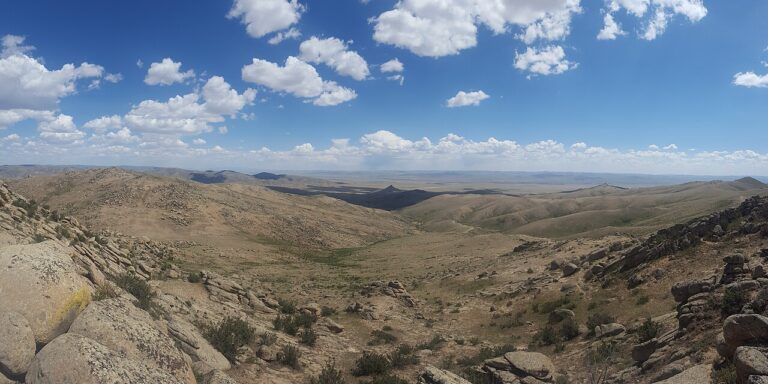 Mongolia Wildlife: Przewalski’s Horses, Snow Leopards and Steppe EaglesMongolia's vast steppes, deserts and mountains hold wild horses, snow leopards and huge skies. Where to go and…
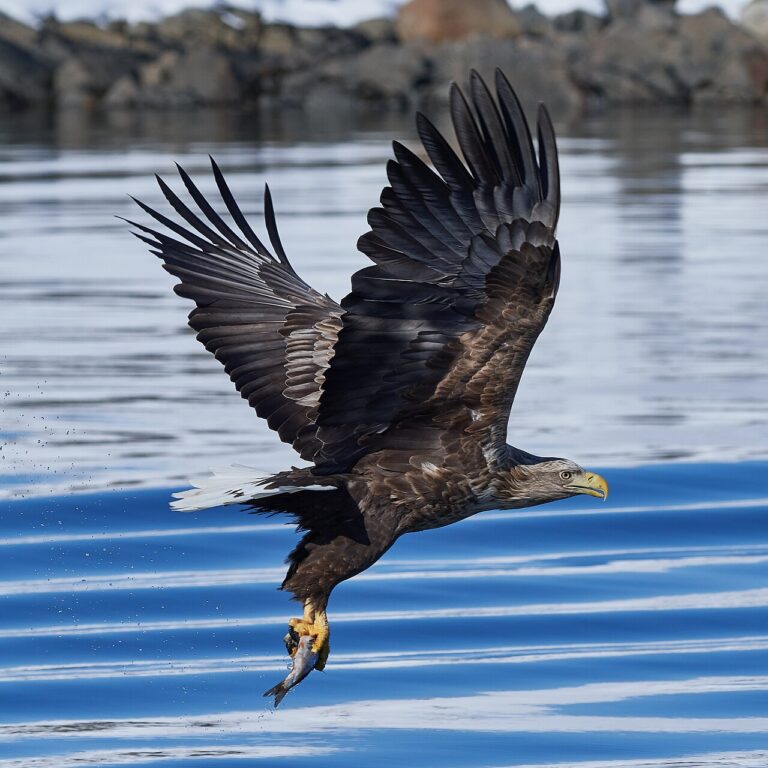 Scotland Wildlife Guide: Red Deer, Otters, Eagles and PuffinsFrom sea eagles on Mull to dolphins in the Moray Firth, Scotland offers some of Europe's best wildlife…
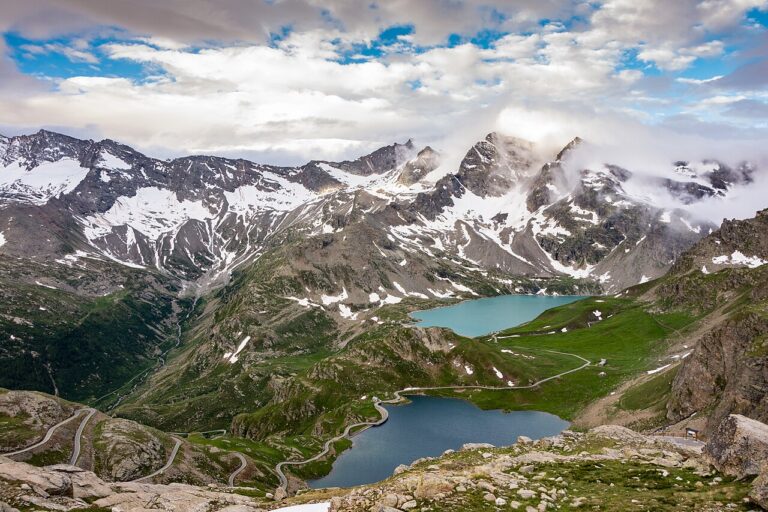 Gran Paradiso: Alpine Ibex and MarmotsItaly's oldest national park saved the Alpine ibex from extinction. It is still one of the best places…