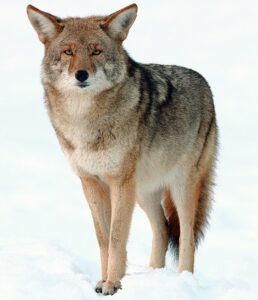
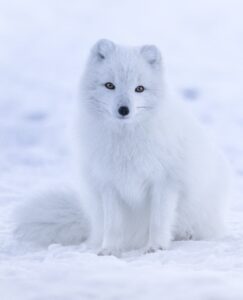
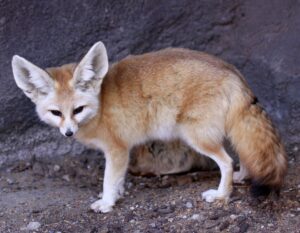
The red fox is a small, clever, adaptable canid found across much of the world. It lives almost anywhere, from Arctic tundra to city centres, eating whatever is available. In Australia, where it was introduced, it is one of the most damaging invasive predators.
Interesting facts
- Red foxes catch mice under snow with a high, arching pounce.
- One study found that foxes were more successful when pouncing in a north-easterly direction, raising the idea that they may use Earth’s magnetic field.
- Despite the name, red foxes can be silver, black or a mix called a ‘cross fox’.
- Foxes store surplus food in hidden caches.
- They were introduced to Australia in the 1800s and now threaten many small native mammals there.
- Urban foxes thrive in cities such as London and Toronto.
Behaviour
Red foxes are mostly nocturnal and crepuscular. They live alone or in small family groups and defend territories marked with scent. They use a wide range of calls, including the eerie screams of vixens in the breeding season.
Breeding and young
Foxes mate in winter. After about 52 days, a litter of four to six cubs is born in an underground den. Both parents bring food, and cubs disperse in autumn.
Threats and conservation
Red foxes are abundant. They are hunted, trapped and controlled in many areas, and they suffer from road deaths and mange.
Where to see it
- Cities such as London, Bristol and Toronto
- Yellowstone National Park, USA
- Hokkaido, Japan, for the Ezo red fox
- Farmland and forests across Europe
Status source: IUCN Red List. Profile last reviewed September 2026.
 Snow Monkeys of Jigokudani and Winter Wildlife in Hokkaido