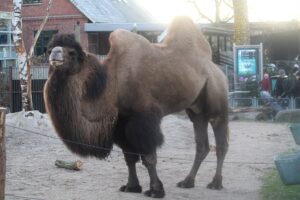
The dromedary, or Arabian camel, is a one-humped camel domesticated in Arabia about 3,000 years ago. It is one of the best-adapted large mammals for life in hot deserts and has shaped trade, travel and culture across North Africa and the Middle East.
Interesting facts
- The single hump stores fat, not water. The fat provides energy when food is scarce.
- Its body temperature can rise by several degrees during the day, so it sweats less and saves water.
- Thick eyelashes, closable nostrils and hairy ears protect it from blowing sand.
- Broad, padded feet spread its weight on soft sand.
- Australia has the largest population of feral dromedaries in the world, descended from camels imported in the 1800s.
- Camels have been used for transport, milk, meat and wool for about 3,000 years.
Behaviour
Camels live in herds, usually of females and young with one dominant male. They can go without drinking for days or weeks in cool seasons, getting moisture from plants. Males in rut inflate a pink sac from their mouths called a dulla to attract females.
Breeding and young
After a gestation of about 13 months, a female gives birth to a single calf, which can walk within a few hours. Calves nurse for about a year.
Threats and conservation
As a domestic animal, the dromedary is not threatened. In Australia, feral camels damage fragile desert ecosystems and water sources, and populations are managed by culling.
Where to see it
- Sahara Desert, Morocco and Egypt
- Arabian Peninsula, including Oman’s and the UAE’s deserts
- Thar Desert and the Pushkar camel fair, Rajasthan, India
- Central Australia (feral herds)
Status source: IUCN Red List. Profile last reviewed September 2026.