The kākāpō is one of the world’s rarest and most unusual birds. Introduced predators nearly wiped it out, and the entire population now lives on predator-free islands under an intensive recovery programme.
Interesting facts
- It is the heaviest parrot in the world.
- It is nocturnal and has a musty-sweet smell.
- Males gather at leks and make deep booming calls that carry for kilometres.
- It breeds only in years when rimu trees fruit heavily.
- Numbers fell to 51 in 1995.
- About 250 kākāpō are alive today.
Behaviour
Kākāpō climb trees using their beaks and feet, and freeze when threatened, a defence that worked against eagles but not against mammals.
Breeding and young
Males boom from bowls dug into the ground at lek sites. Females raise chicks alone. Rangers monitor nests closely and sometimes hand-rear chicks.
Threats and conservation
Introduced predators, low genetic diversity, disease and infrequent breeding.
Where to see it
- Not visible to the public in the wild; occasional supervised encounters are organised by New Zealand’s Department of Conservation
Status source: IUCN Red List. Profile last reviewed September 2026.
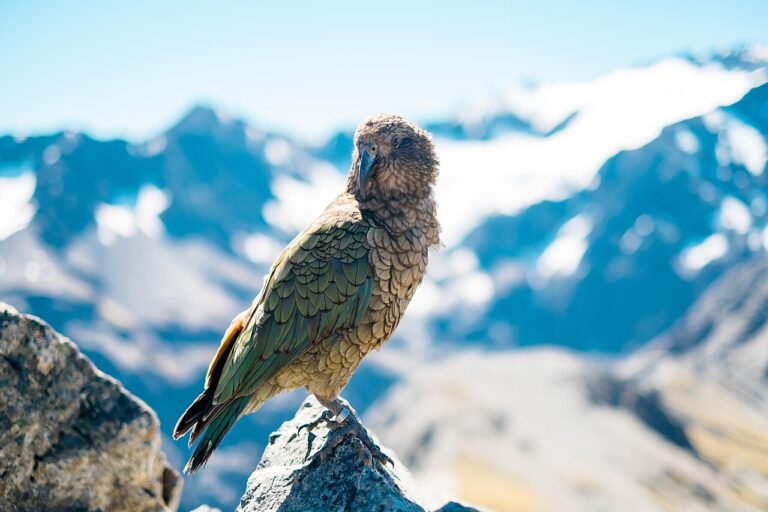 New Zealand Wildlife Guide: Kiwi, Kea, Penguins and Whales
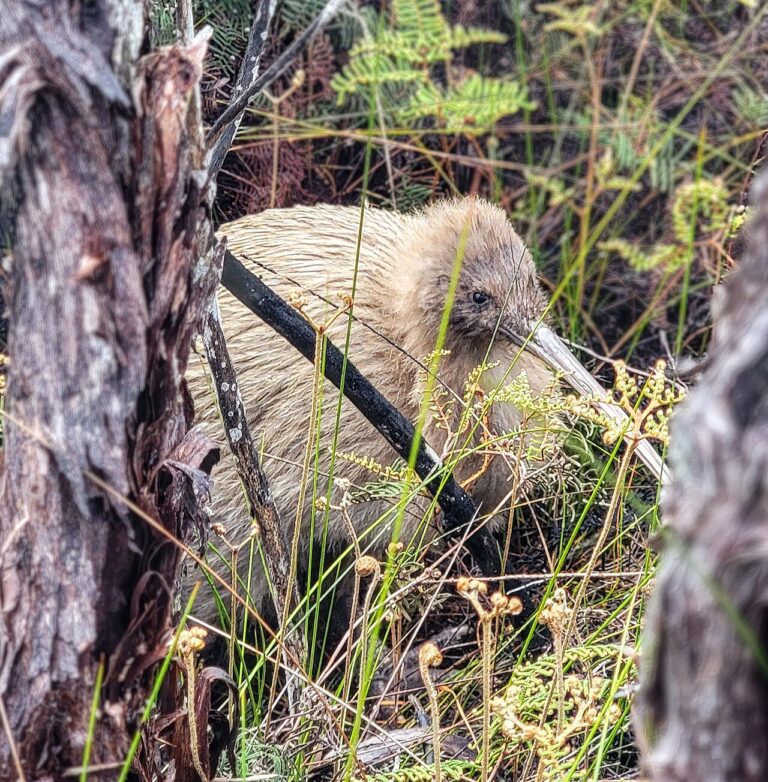 Seeing Wild Kiwi on Stewart Island