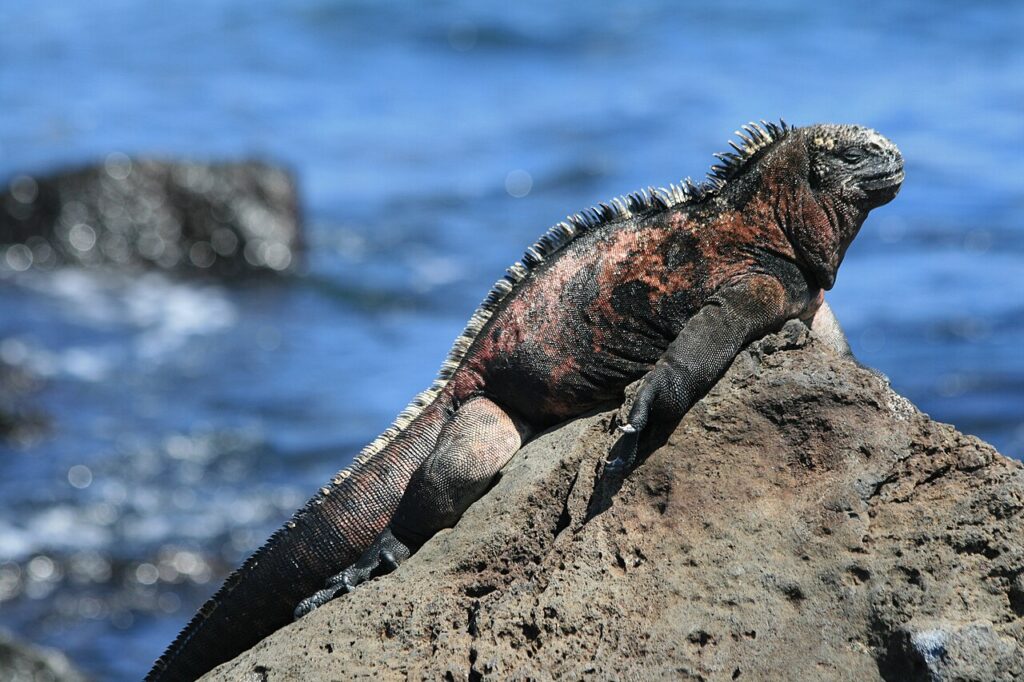
Nowhere else on Earth can you snorkel with sea lions and penguins in the morning, walk past nesting blue-footed boobies at lunchtime and sit beside a giant tortoise in the afternoon. The Galápagos Islands, about 1,000 km off the coast of Ecuador, are a living laboratory of evolution, and because their animals evolved without large predators, many show little fear of people. This guide covers what you will see, where and when to go, and how to plan your trip.
Why the Galápagos are special
The islands are volcanic and have never been connected to the mainland. Every species that lives there arrived by floating, swimming or flying across the ocean, then evolved in isolation, often into different forms on different islands. When Charles Darwin visited in 1835, he noticed that mockingbirds and tortoises differed from island to island, observations that helped him develop the theory of evolution by natural selection.
About 97 percent of the land area is national park, and the surrounding Galápagos Marine Reserve is one of the largest in the world. The islands were among the first places listed as UNESCO World Heritage Sites, in 1978.
Wildlife you will see
On land
- Galápagos giant tortoises, the largest tortoises on Earth, living wild in the highlands of Santa Cruz and Isabela.
- Land iguanas, large yellow-orange lizards found on islands such as North Seymour, South Plaza and Isabela.
- Lava lizards, small and common on most islands.
- Darwin’s finches, a group of closely related species with beaks adapted to different foods.
- Galápagos mockingbirds, whose differences between islands caught Darwin’s attention.
Along the shore
- Marine iguanas, the only lizards in the world that feed in the sea, grazing on algae.
- Galápagos sea lions, which lounge on beaches, benches and boat docks.
- Sally Lightfoot crabs, bright red crabs on the black lava rocks.
- Galápagos fur seals, found in shaded rocky areas.
Seabirds
- Blue-footed boobies, famous for their dance, where males lift their bright blue feet to impress females.
- Nazca and red-footed boobies.
- Magnificent frigatebirds, whose males inflate huge red throat pouches in courtship.
- Waved albatrosses, which breed almost exclusively on Española Island.
- Flightless cormorants, which lost the ability to fly on Fernandina and Isabela.
- Galápagos penguins, the only penguins that live at the equator.
Underwater
Snorkelling is one of the highlights of any Galápagos trip. Depending on the site and season, you may swim with sea lions, green sea turtles, Galápagos penguins, marine iguanas feeding underwater, white-tipped reef sharks, eagle rays, manta rays and huge schools of fish. Divers may see hammerhead sharks, especially around Wolf and Darwin islands in the far north.
Which islands for which wildlife
| Island | Highlights |
|---|---|
| Santa Cruz | Giant tortoises in the highlands, Charles Darwin Research Station, Tortuga Bay |
| Isabela | Giant tortoises, flamingos, penguins, marine iguanas, volcanoes |
| Fernandina | Huge marine iguana colonies, flightless cormorants, pristine lava fields |
| Española | Waved albatrosses (April to December), blue-footed and Nazca boobies, colourful marine iguanas |
| Genovesa | Red-footed boobies, frigatebirds, storm petrels, short-eared owls (Darwin Bay) |
| North Seymour | Blue-footed boobies, frigatebirds, land iguanas |
| San Cristóbal | Sea lion colonies, Kicker Rock snorkelling, Punta Pitt boobies |
| Bartolomé | Iconic Pinnacle Rock view, penguins, snorkelling |
| Floreana | Flamingos, green turtle nesting beaches, Post Office Bay |
| South Plaza | Land iguanas, sea lions, swallow-tailed gulls |
When to go
The Galápagos can be visited year-round. There are two main seasons, shaped by ocean currents.
| Season | Months | Weather and sea | Wildlife highlights |
|---|---|---|---|
| Warm (wet) season | December to May | Warmer air and water, sunshine with short showers, calmer seas | Green landscapes, sea turtle nesting, land birds breeding, good snorkelling visibility |
| Cool (garúa) season | June to November | Cooler, misty, drier; rougher seas at times | Richer marine life, seabirds breeding, waved albatrosses on Española, more active sea lions and penguins |
Month by month
- January to March: warm water, green turtles nesting, land iguanas breeding; good for snorkellers who dislike cold water.
- April: waved albatrosses begin arriving on Española; green season landscapes.
- May: blue-footed booby courtship on Española and North Seymour.
- June to August: cooler water brings nutrient-rich currents, whale sharks in the far north for divers, humpback whales passing; seas can be choppy.
- September to October: cold water but great marine life; sea lion pups and penguin activity; fur seals mating.
- November to December: sea lion pups; water starts warming; a good balance of conditions.
Cruise or land-based trip?
Expedition cruises (typically 4 to 15 days) travel between islands overnight and reach remote sites that day trips cannot, such as Genovesa, Fernandina and Española. They offer the most complete wildlife experience. Boats range from small yachts of 16 passengers to larger ships of up to about 100.
Land-based trips use hotels on the inhabited islands (Santa Cruz, San Cristóbal, Isabela and Floreana) with day trips by boat. They are usually cheaper and better for people prone to seasickness, but reach fewer sites.
A good compromise for many travellers is a 5- to 8-day cruise combined with a few nights on land. See our cruise vs land-based comparison guide for details.
Getting there
Fly to Quito (UIO) or Guayaquil (GYE) in mainland Ecuador, then take a domestic flight to Baltra (GPS), near Santa Cruz, or San Cristóbal (SCY). Flights take about two hours from Guayaquil and three to four from Quito (usually via Guayaquil). Many cruises specify which airport you must fly into.
Fees and entry requirements
- Galápagos National Park entrance fee: US$200 per adult for foreign visitors (US$100 for children under 12), paid in cash on arrival. The fee doubled from US$100 in August 2024.
- Transit Control Card: US$20, bought at the airport in Quito or Guayaquil before your flight.
- Your bags are inspected for plants, seeds, fruit and other items that could introduce invasive species.
- You will need proof of accommodation or a cruise booking and a return ticket.
Fees can change, so check with your operator before you go.
Visitor rules
The Galápagos have some of the strictest visitor rules of any destination, and they are the reason the wildlife is still so approachable.
- Stay at least 2 metres from wildlife.
- Visit national park sites only with a licensed naturalist guide.
- Stay on marked trails.
- Never touch or feed animals, and do not use flash photography.
- Do not take anything from the islands, including shells, sand and rocks.
- Do not bring plants, seeds or animals to the islands.
What to pack
- Reef-safe sunscreen, a sun hat, sunglasses and a rash vest; the equatorial sun is intense.
- A wetsuit (many boats rent them) for cooler months.
- Walking sandals and sturdy shoes for lava trails.
- A waterproof bag or dry bag for wet landings.
- Seasickness remedies, even if you rarely get seasick.
- A camera with a wide-angle lens for close-ups and a zoom for birds; an underwater camera is a bonus.
- Cash in US dollars for the park fee and tips.
Conservation in the Galápagos
The islands face serious challenges: invasive species such as rats, goats, cats, fire ants and blackberry; growing tourism and a growing resident population; illegal fishing; plastic pollution; and warming seas and El Niño events, which reduce food for marine iguanas, sea lions and penguins. Conservation successes include the removal of goats from Santiago and northern Isabela, the eradication of rats from islands such as Pinzón, where giant tortoises are now breeding in the wild again, and the rediscovery in 2019 of a Fernandina giant tortoise, a species thought extinct for more than a century.
Frequently asked questions
What is the best time to visit the Galápagos? There is no bad time. December to May offers warmer water and calmer seas; June to November brings cooler, nutrient-rich water and more active marine life and seabirds.
How many days do I need? At least five full days, ideally seven to ten, to visit a range of islands and see the main species.
Can I see the Galápagos without a cruise? Yes. Land-based trips from Santa Cruz, San Cristóbal and Isabela are popular, although some remote islands can only be reached by cruise.
Is snorkelling suitable for beginners? Yes, many sites are calm and shallow, and guides provide instructions. Wetsuits are recommended from June to November.
How much does a Galápagos trip cost? Costs vary widely. Land-based trips can be relatively affordable; small-ship cruises often cost several hundred to over a thousand US dollars per person per day, plus flights, the US$200 park fee and the US$20 transit card.
Related guides
- Wildlife of South America
- Animal profiles: Galápagos Giant Tortoise, Green Sea Turtle
- Learn: Evolutionary ecology and Darwin’s finches, Island biogeography
Cover photo: RAF-YYC from Calgary, Canada, CC BY-SA 2.0, via Wikimedia Commons