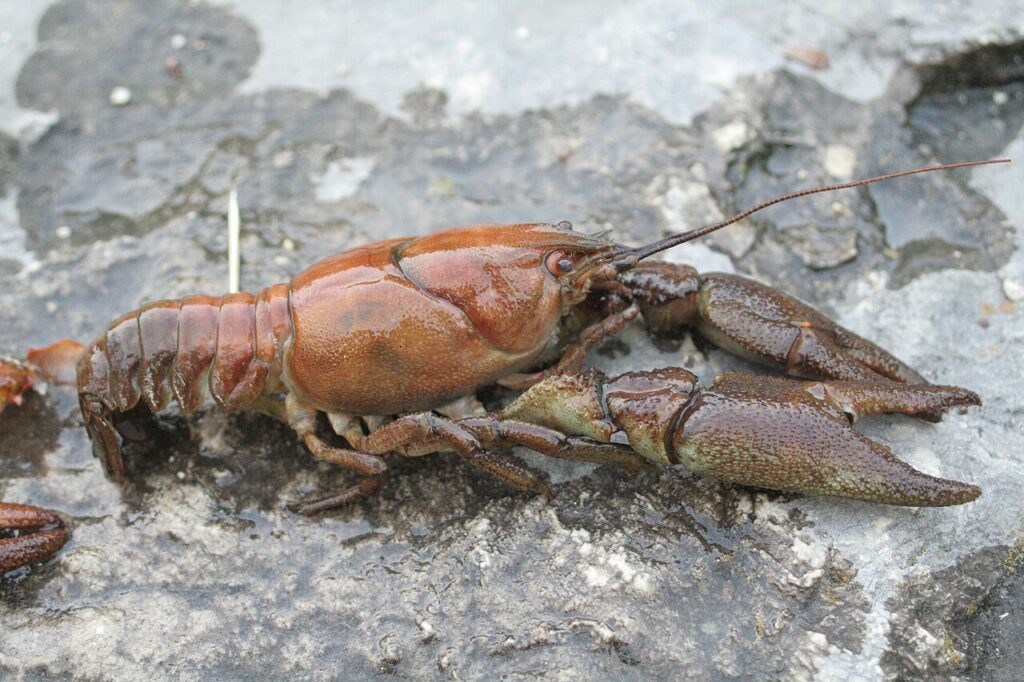
England’s only native freshwater crayfish has been thrown a lifeline. A national recovery programme for the white-clawed crayfish, announced by The Wildlife Trusts on 8 July 2026, brings together around 40 organisations in the largest coordinated effort yet to save the species.
Key facts
- Species: white-clawed crayfish (Austropotamobius pallipes), globally Endangered
- Where: rivers and streams across England
- Who: The Wildlife Trusts, Natural England, the Environment Agency, Bristol Zoological Society and around 40 partners
- Funding: £1.5 million from Natural England’s Species Recovery Programme; more than £2.2 million in total with partner contributions
- Runs until: March 2029
What happened
The Wildlife Trusts will coordinate the programme nationally, while regional Wildlife Trusts, including those in Yorkshire, Derbyshire, Warwickshire, Staffordshire, Gloucestershire and Hampshire, will lead the work on the ground. The plan combines:
- monitoring of surviving populations;
- assessing threats across whole river catchments;
- captive breeding and rearing of young crayfish for release;
- building a mapping tool to find places where crayfish can be protected;
- genetic research, including work on disease resistance; and
- freezing genetic material in a biobank for the future.
Stan Smith, head of nature and species recovery at The Wildlife Trusts, called the programme a significant milestone for white-clawed crayfish conservation.
Why it matters
White-clawed crayfish numbers have fallen by an estimated 70–80 percent in recent decades. The main threat comes from invasive North American signal crayfish, which were introduced to Britain for farming. They outcompete the native species and carry crayfish plague, a disease that can wipe out whole populations of white-clawed crayfish within weeks. Pollution and damage to river habitats add to the pressure.
Crayfish are important in freshwater ecosystems, recycling nutrients and providing food for otters, herons and fish. Their recovery is a good measure of the health of England’s rivers.
What you can do
- If you paddle, fish or wade in rivers, follow the Check, Clean, Dry routine so you don’t spread crayfish plague or invasive species between waterways.
- Never move crayfish from one river to another.
- Report sightings of crayfish to your local Wildlife Trust or records centre.
Sources
- Rare white-clawed crayfish thrown a lifeline by ambitious national recovery programme, The Wildlife Trusts, 8 July 2026
- England launches biggest-ever crayfish recovery effort, Envirotec
Read more about freshwater wildlife in our Eurasian otter and grey heron profiles.
Cover photo: David Gerke, CC BY-SA 3.0, via Wikimedia Commons