The sea otter is the smallest marine mammal and one of the few mammals that uses tools. Its recovery since international protection in 1911 has restored kelp forests along parts of the Pacific coast, although some populations remain small or are declining.
Interesting facts
- Sea otters use rocks as tools to crack open shellfish, often balancing them on their chests.
- They wrap themselves in kelp so they do not drift away while sleeping.
- Groups resting together are called rafts.
- A sea otter must eat about a quarter of its body weight every day.
- Sea otters are a keystone species that protect kelp forests by eating sea urchins.
- They were hunted for fur to perhaps 1,000–2,000 animals by the early 1900s.
Behaviour
Sea otters spend almost their whole lives at sea, floating on their backs. They dive to the seafloor to collect prey and store food in loose pouches of skin under their forelegs.
Breeding and young
Females give birth to a single pup, usually in the water. Pups are so buoyant they cannot dive, and mothers carry them on their chests for several months.
Threats and conservation
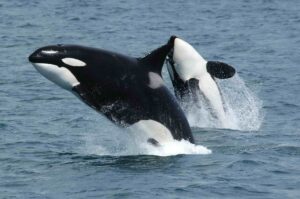
Oil spills, which ruin the insulation of their fur, disease, predation by orcas in parts of Alaska, entanglement in fishing gear and shark bites.
Where to see it
- Monterey Bay, California
- Morro Bay, California
- Kachemak Bay and Prince William Sound, Alaska
- Vancouver Island, Canada
Status source: IUCN Red List. Profile last reviewed September 2026.
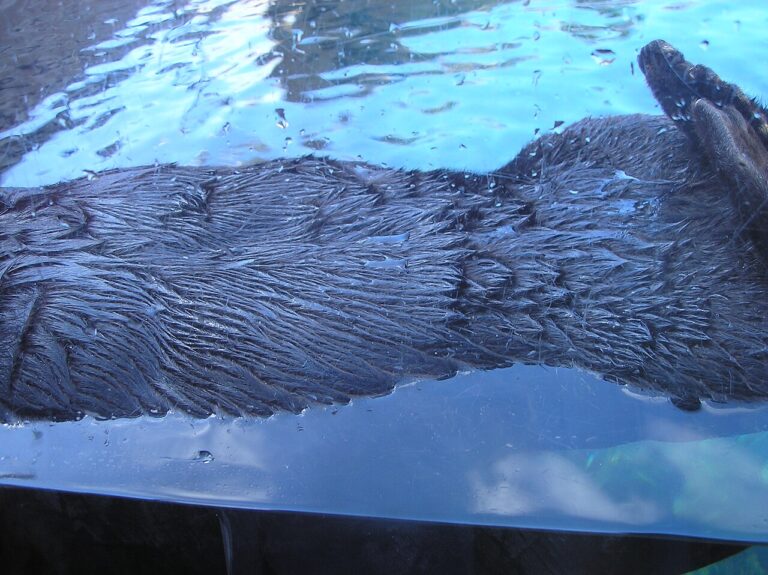 Monterey Bay: Sea Otters, Whales and Kelp Forests